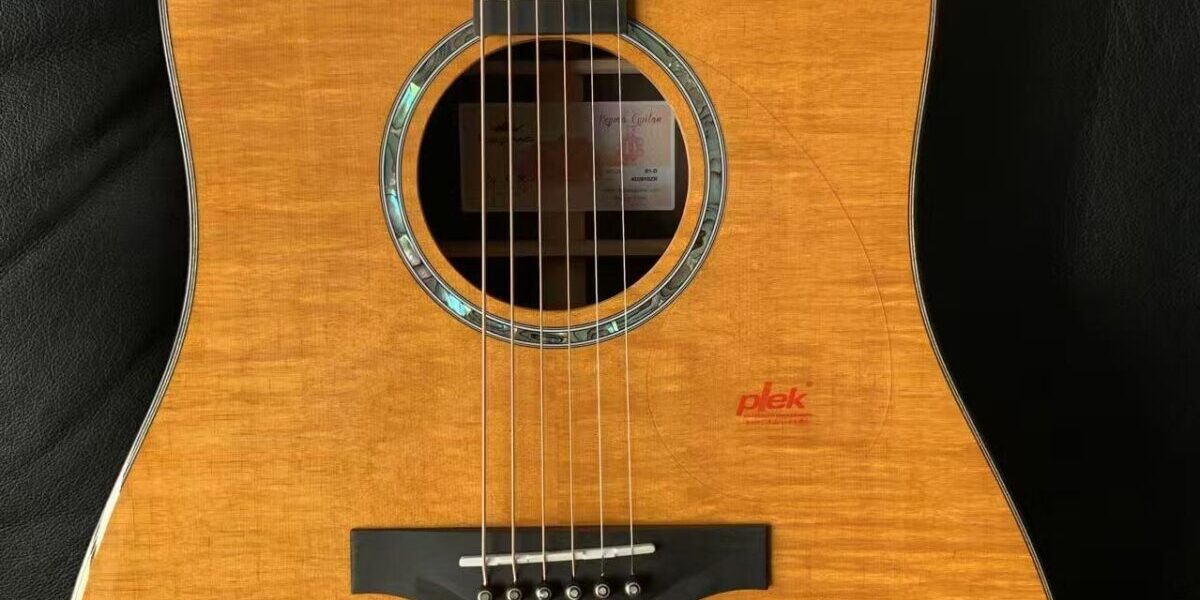
In the world of musical instruments, the selection of a soundboard is a precise discipline that blends tradition, science, and art. Among the many spruces used for guitar soundboards, a unique figure known as “bearclaw” (Bear Claw) has evolved from a feature once regarded as a flaw into a highly prized treasure. This chapter aims to establish a clear definition of bearclaw, explain its nature and causes, and distinguish it from other wood figures.
1.1 A Visual Dictionary
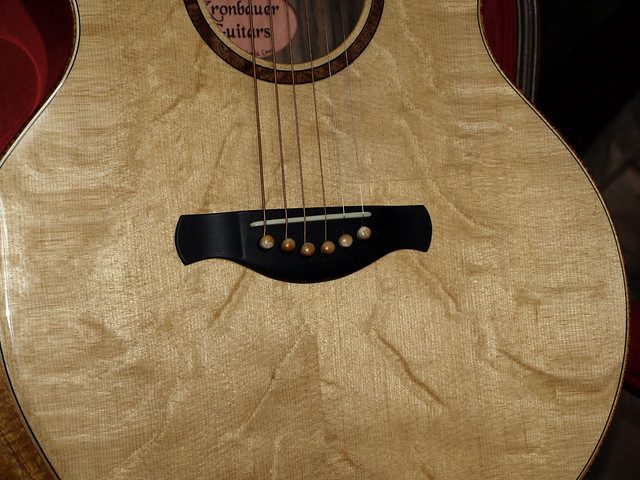
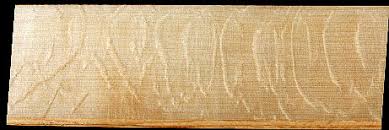
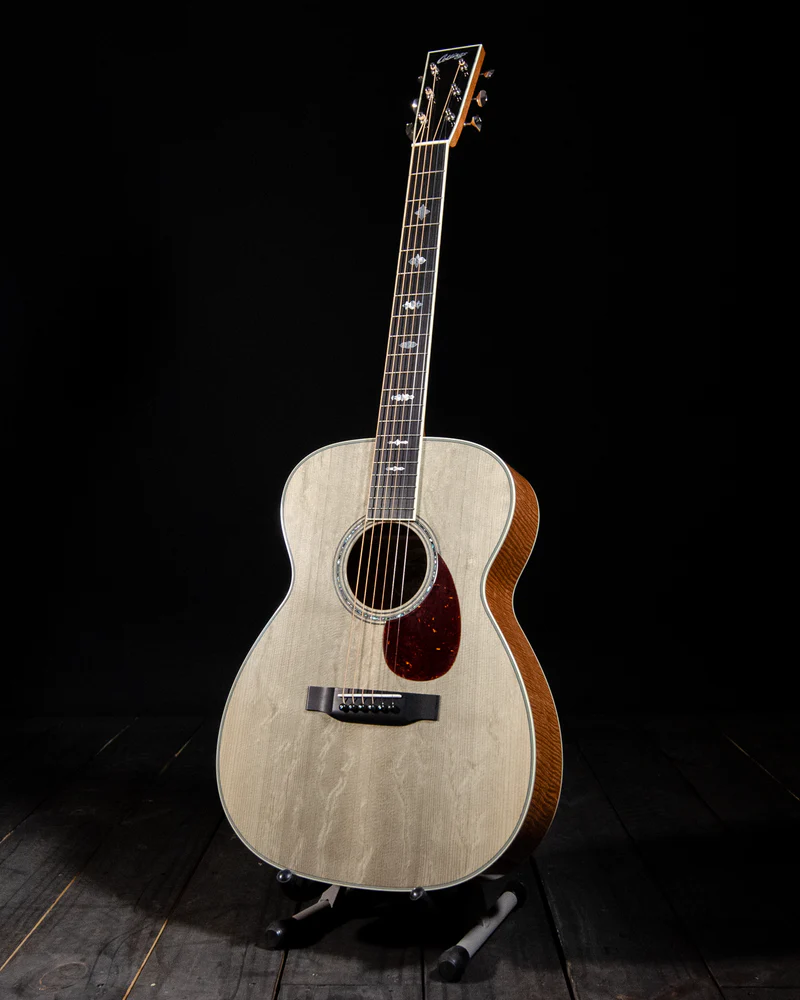
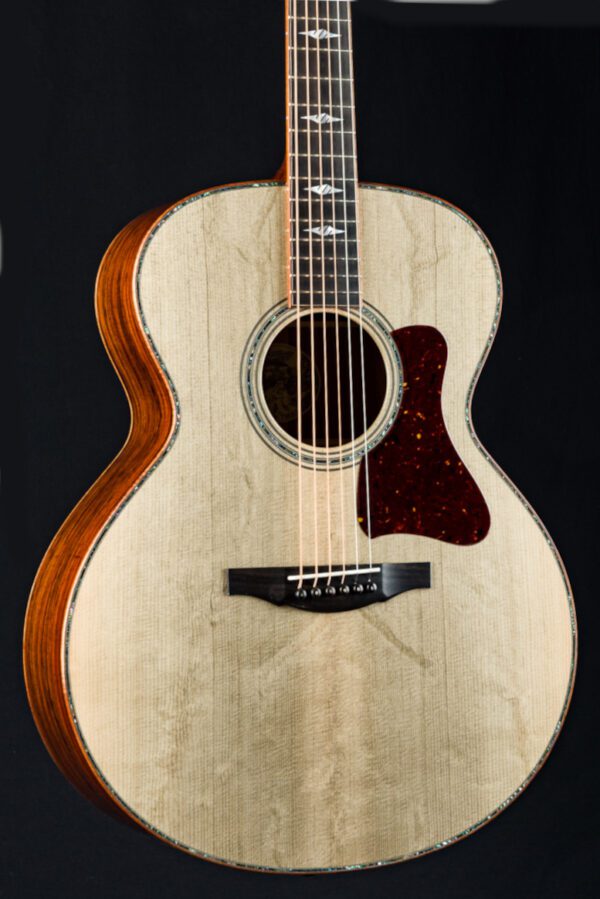
Bearclaw, also known in Europe as hazelfichte (German for “hazel spruce”) or maschiatura (Italian), is a distinctive figure that occurs in spruce wood. It is not actually caused by bear claws, but is a natural formation arising from the wood’s own growth process. Its visual signature is a shimmering, asymmetrical, and randomly interrupted pattern of streaks and waves across the wood’s surface. These lines resemble the marks a bear’s claws would leave raked across the wood, hence the name.
The key to identifying bearclaw accurately lies in distinguishing it from other common wood figures. First, it is entirely different from the regular, wave-like flame figure (flame maple) or curly figure (curly maple) common in maple. The bearclaw pattern is far more random and irregular. Second, it must be distinguished from medullary rays. Medullary rays are the fine, line-like structures seen on quartersawn wood that run perpendicular to the growth rings, often called “silk”; they are the channels through which the tree transported nutrients. Bearclaw, by contrast, is a distortion or deformation of the growth rings themselves, running roughly parallel to the rings but with local waviness. This distinction is essential for evaluating a soundboard correctly.
The very number of names for this phenomenon reveals its long history. The existence of terms such as Hazelfichte, maschiatura, and bearclaw shows that luthiers in Europe and America recognized this characteristic long before its scientific causes were fully understood. There is evidence that Italian master makers such as Stradivari and Del Gesù used wood bearing maschiatura.
The name hazelfichte most likely arose because, once the bark is removed, the sunken pattern of the wood bears a striking visual resemblance to the bark of a hazel tree. This suggests that luthiers of different traditions independently identified and named this wood characteristic — evidence that they may have recognized through experience its unique properties, whether aesthetic or physical.
1.2 The Root Cause: Indented Growth Rings
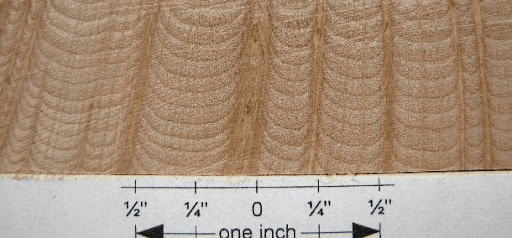
The visual appearance of bearclaw is the surface manifestation of an internal structural anomaly known as “indented grain”. The scientific explanation is that the wood’s longitudinal fibers were locally compressed or buckled during growth, causing the growth rings to dip or indent. Once the board is cut and surfaced, the cross-sections of these indentations reflect light at varying angles, producing the shimmering, deep-looking figure visible to the eye.
A key finding is that the form of this indentation differs among wood genera, producing different visual patterns. In softwoods such as spruce, this “regular” indentation takes the shape of rectangular or sine-wave-like crests, which produces the characteristically random lines of bearclaw wandering freely across the soundboard. In hardwoods such as maple, however, a triangular indentation known as “spiked” produces longer, more parallel lines — sometimes also called bearclaw, but structurally different from the spruce form. This article focuses on the bearclaw figure found in softwoods.
1.3 The Spruce Spectrum
The bearclaw phenomenon can occur in all species of spruce, including Sitka spruce, Engelmann spruce, Adirondack spruce, and Norway spruce. Although it has been found in every species, the experience of luthiers and wood suppliers indicates that bearclaw is most common in Sitka spruce. This may simply be because Sitka spruce is used in the greatest volume for instrument making, or it may relate to a genetic tendency within the species. In any spruce, however, the appearance of bearclaw is regarded as a rare and distinctive mark.
Chapter 2: The Science of Sound: Vibro-Mechanical Properties and Soundboard Quality
Moving from distinctive visual beauty to rigorous scientific analysis, this chapter examines the physical properties of bearclaw spruce in depth, revealing how its microstructure affects its macroscopic performance as a soundboard. For a long time, luthiers have relied on experience and intuition to believe that bearclaw wood possesses outstanding acoustic potential; modern scientific research is now beginning to provide solid theoretical support for this traditional wisdom.
2.1 Microstructure and Its Macroscopic Effects
At the microscopic level, the indented rings of bearclaw regions represent a localized disruption of cell structure — a place where the wood cells are described as having “messed up”. This indentation causes the denser latewood and the less dense earlywood to overlap. In a normal ring structure, earlywood and latewood are arranged in layers, whereas this overlap creates a kind of composite reinforcement. The mechanism is that the hard latewood effectively protects the relatively fragile earlywood, preventing excessive accumulation of strain under stress. This micro-level structural reinforcement is the fundamental reason for the changed physical properties of bearclaw spruce.
2.2 Measurable Performance Differences
These microstructural changes ultimately translate into macroscopically measurable differences in physical performance — differences that matter greatly to the vibration behavior of a soundboard.
- Increased stiffness (modulus of elasticity): Scientific studies of Norway spruce with indented rings have confirmed significant increases in specific stiffness in the radial (Radial, R) and longitudinal-radial shear (LR shear plane) directions, although stiffness decreases along the longitudinal (Longitudinal, L) axis. This is a key finding backed by data. The increased stiffness also matches the long-standing empirical observations of luthiers and suppliers, who generally find bearclaw wood to be harder.
- Reduced anisotropy: Wood is an anisotropic material, meaning its physical properties differ by direction. Because stiffness in bearclaw regions changes across directions, the wood’s degree of anisotropy is reduced. This homogenization of properties may have profound effects on the vibration modes of a soundboard, making its vibrational behavior more uniform and predictable.
- Effects on instrument dynamics: When modeling violins, the same study found that using wood with these characteristics leads to an overall rise in resonance frequencies and pushes the admittance peaks at the bridge to higher frequencies. This scientifically models and explains why such wood is commonly described as producing a “brighter” tone.
These scientific findings provide a causal explanation for luthiers’ intuitions accumulated over centuries. The debate over whether bearclaw “sounds better” can be reframed: the underlying indented-ring structure genuinely alters the wood’s physical properties, in ways fully consistent with descriptions of a “stiffer”, “brighter” soundboard. Luthiers have long claimed that bearclaw wood is harder, and describe its tone as having a “bright edge”. Independent scientific research has not only measured increased stiffness along key directions but also predicted, through modeling, a shift in acoustic response toward higher frequencies — which is precisely the physical definition of a “bright” tone. The scientific data therefore provide a physical mechanism that directly explains the tonal character observed by luthiers. The link is no longer mere correlation or anecdote, but a plausible causal relationship.
2.3 A Marker of Excellence
Beyond the direct changes in physical properties, the presence of bearclaw itself is often regarded as a reliable visual indicator for screening high-quality soundboards. Bearclaw almost always appears in older, more mature trees. Having grown over a long period, these old trees have developed a dense, hard ring structure, and consequently exhibit high sound velocity — a key indicator of a top-grade soundboard.
The most basic formula for calculating the speed of longitudinal waves in a solid is (note the anisotropy of wood):
v = \sqrt{\frac{E}{\rho}}where:
- v is the sound velocity (velocity of sound), in meters per second (m/s).
- E is Young’s Modulus, or modulus of elasticity, representing the stiffness of the material, in pascals (Pa) or newtons per square meter (N/m²).
- ρ (rho) is the density of the material, in kilograms per cubic meter (kg/m³).
This strong correlation leads to an important conclusion: in any spruce, bearclaw is generally a reliable visual marker for identifying soundboard samples of superior quality. It should be emphasized that bearclaw itself does not cause good tone; rather, it acts as a “symptom” indicating the outstanding fundamental qualities of the wood behind it. A bearclaw spruce soundboard therefore typically starts from a higher baseline than an ordinary soundboard without this feature.
Chapter 3: The Great Tone Debate: Separating Audible Fact from Marketing Fiction
The core controversy surrounding bearclaw is how much it ultimately affects the tone of a finished guitar. Although the scientific analysis in the previous chapter confirmed changes in physical properties, whether that influence is significant and predictable in the real-world experience of players and luthiers remains a divisive question. This chapter confronts the debate directly, laying out the arguments of both sides in an attempt to separate audible fact from marketing claims.
3.1 The Case for Enhanced Tone
The case in favor of bearclaw enhancing tone rests chiefly on a direct link between physical properties and auditory perception.
- The luthiers’ assertion: Many renowned luthiers and soundboard experts believe that the increased cross-grain stiffness brought by bearclaw can enhance tone and sustain. They describe the wood as harder and heavier, producing a bright sound with an “edge” and excellent projection. Some European wood suppliers also note that the abete maschio (bearclaw spruce) in their stock consistently shows not only higher stiffness and lower weight but also a tone that differs noticeably from ordinary spruce.
- The players’ experience: Some players report that guitars with bearclaw soundboards seem to them to have stronger low-frequency response or greater volume than identical models without the figure. These personal accounts are subjective, but they form an important body of opinion supporting its tonal advantages.
3.2 The Case for Acoustic Neutrality
On the other side, a considerable portion of the luthier and player community maintains that bearclaw is primarily a purely aesthetic feature with no perceptible or predictable effect on tone.
- A purely aesthetic factor: This view holds that bearclaw’s effect on guitar tone is negligible, and that its value lies entirely in its unique appearance.
- The “separate wood” argument: This is the most common counterargument. It holds that any supposed tonal advantage should be credited to the intrinsic qualities of that particular piece of wood (qualities associated with bearclaw but not caused by it), rather than to the figure itself. Two guitars — one with bearclaw, one without — will inevitably sound different, because they are made from two entirely different pieces of wood. Attributing tonal differences entirely to the presence of bearclaw is therefore logically unsound.
3.3 Synthesizing Expert Opinions and Community Wisdom
Reaching a balanced conclusion in this debate requires weighing all viewpoints and acknowledging the complexity of the question.
- Bourgeois: Luthier Dana Bourgeois’s view — that bearclaw is a reliable indicator of the hard, high-velocity wood found in old trees — is the most frequently cited cornerstone of the argument for its tonal relevance and forms the basis of its modern value assessment. This position cleverly positions bearclaw as an “indicator” rather than a “cause”, sidestepping the direct debate over causation.
- The A/B testing dilemma: Experienced dealers and luthiers admit that a truly “like-for-like” comparison is virtually impossible, because no two soundboards in the world are identical. Any conclusion about bearclaw’s direct tonal influence is therefore bound to be subjective and unscientific.
- A synthesis of the debate: The most reasonable combined view is this: although the underlying structure of bearclaw does change the wood’s physical properties, the resulting tonal differences may be very subtle and difficult to isolate from the countless other variables in guitar making (soundboard thickness, brace carving, back and side woods, finish, and so on). Its main value, therefore, lies in being an indicator of potentially superior wood rather than a guarantee of any particular tone.
That this tonal debate persists — even with scientific evidence that physical properties change — reveals a “perception gap” between measurable physical data and the subjective human experience of listening to a complex acoustic system. Chapter 2 established that bearclaw wood shows measurable differences in stiffness and resonance characteristics. Chapter 3, however, showed deep divisions within the community, with many experienced players and luthiers claiming they cannot hear a consistent difference. The final sound of a guitar is the product of dozens of variables; a small change in soundboard physics is only one of them. A luthier might compensate for the extra stiffness of a soundboard through different brace carving, effectively neutralizing the wood’s inherent tendency. The debate therefore persists not because the physical effect does not exist, but because its contribution to the final, complex acoustic output is difficult to isolate — or is smaller than other build variables. It is a classic “signal-to-noise” problem in a complex system.
Chapter 4: From Defect to Treasure: The Market Evolution and Value Assessment of Bearclaw
This chapter examines the commercial dimension of bearclaw, tracing its remarkable journey from a once-scorned flaw to a premium feature. We will quantify the impact of this transformation on the prices of both raw material and finished guitars, and explore the deeper industry trends behind it.
4.1 The Shift in Historical Perception
The evolution of bearclaw’s value is a microcosm of the shifting perceptions of the acoustic guitar industry.
- The era of the “flaw”: For a long time, mainstream guitar manufacturers widely regarded bearclaw as a cosmetic defect or blemish. On the production line, such wood was either discarded or relegated to low-end models. At the time, both manufacturers and consumers preferred spruce soundboards with straight, uniform, “perfect” grain.
- The marketing turning point: The shift in perception was driven by several factors. First, some boutique hand-builders began to recognize the association between bearclaw and old-growth wood, and deliberately chose such material. Second, consumer aesthetics gradually diversified, and players began to appreciate one-of-a-kind grain with “personality”. Finally, as wood resources grew scarcer, the industry adjusted both practice and marketing strategy to make fuller use of every precious soundboard.
4.2 Grading and Pricing of Raw Material
Today, in the soundboard supply market, bearclaw spruce is explicitly positioned as a premium product, priced well above standard spruce of the same grade.
- Premium pricing: Soundboard suppliers sort bearclaw spruce tops into a separate category and sell them at higher prices. Users have noted that they can cost “three times as much” as ordinary Sitka spruce. Judging by suppliers’ quotes, a bearclaw top set for a Dreadnought guitar ranges from $65 to over $200.
- Grading systems: Suppliers typically use grading systems such as AA, AAA, and Master Grade. For bearclaw tops, beyond the usual criteria of grain density and quartersawn angle, the core of the grade includes the prominence of the bearclaw pattern, the evenness of its distribution, and its overall aesthetic effect. The denser, clearer, and more beautiful the figure, the higher the grade and the price.
To show bearclaw’s price premium in the raw-material market more concretely, the table below consolidates data from different suppliers.
Table 4.1: Market Price Comparison of Bearclaw Sitka Spruce Soundboard Sets
| Supplier | Wood Species | Grade | Price (USD) |
| Timeless Instruments | Bearclaw Sitka spruce | AA | $65.00 |
| Timeless Instruments | Bearclaw Sitka spruce | AAA | $65.00 – $75.00 |
| Hughes Tonewoods | Bearclaw Sitka spruce | Not specified | $75.00 |
| StewMac | Bearclaw Sitka spruce | AAAA | $125.49 |
| StewMac | Bearclaw Sitka spruce | Master | $163.49 |
| Allied Lutherie | Bearclaw Sitka spruce | Not specified | $200.00 |
4.3 Value Positioning of Finished Instruments
The premium on raw material eventually passes through to the finished-instrument market, and major brands have made bearclaw an important element for boosting product value and appeal.
- High-end specification: Mainstream brands such as Martin and Taylor now offer bearclaw as a standard feature or paid upgrade on special editions and Custom Shop models — an unequivocal positioning of it as a value-adding component.
- Price impact: A Martin D-28-style guitar with a bearclaw top can retail for over $4,000. In the Custom Shop, models equipped with a top-grade bearclaw top can easily exceed $6,000 depending on other specifications — and even surpass $11,000. This shows that the presence of bearclaw can genuinely raise the market value of a finished instrument.
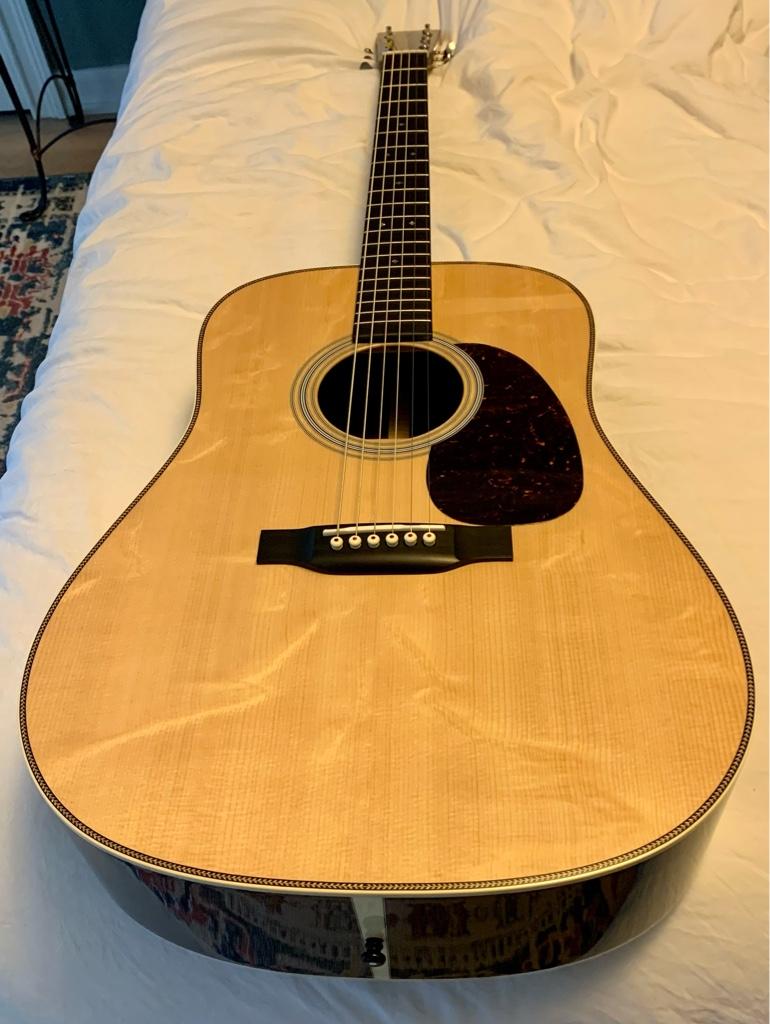
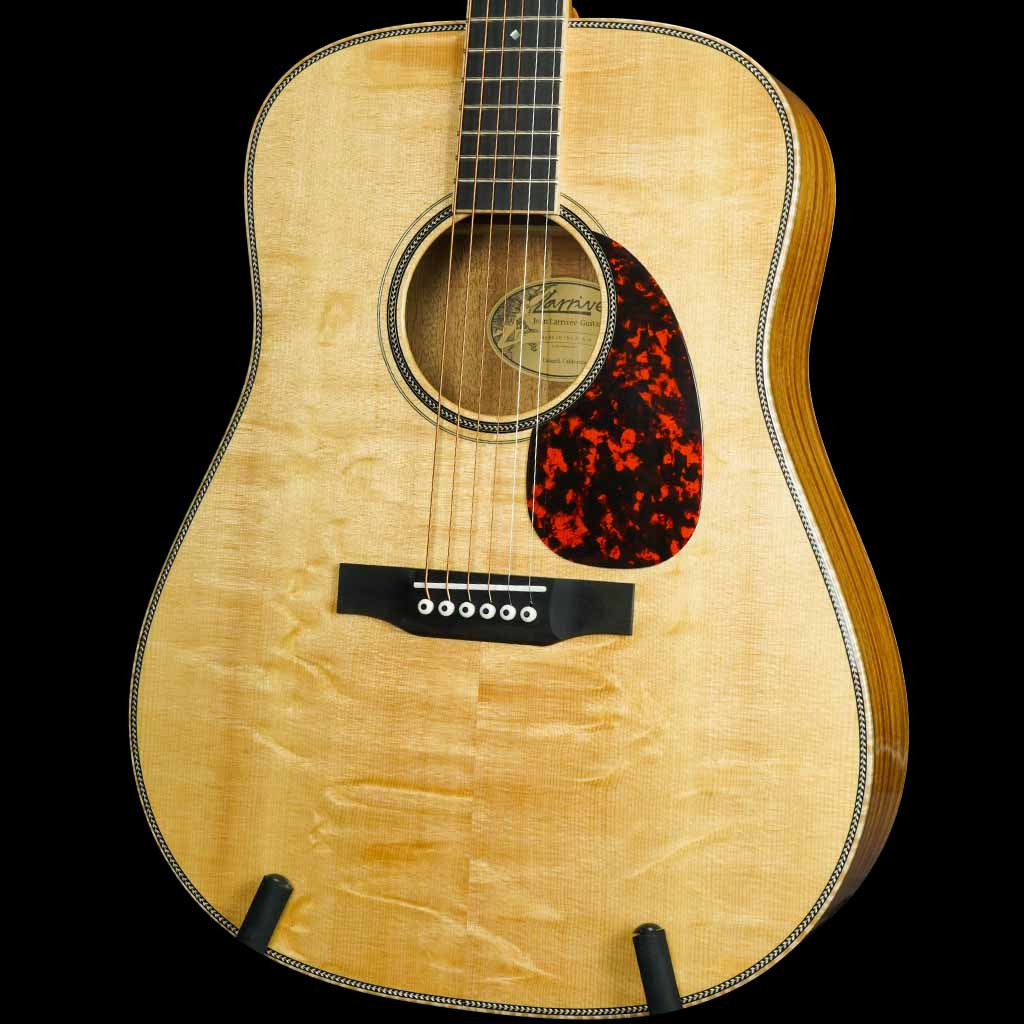
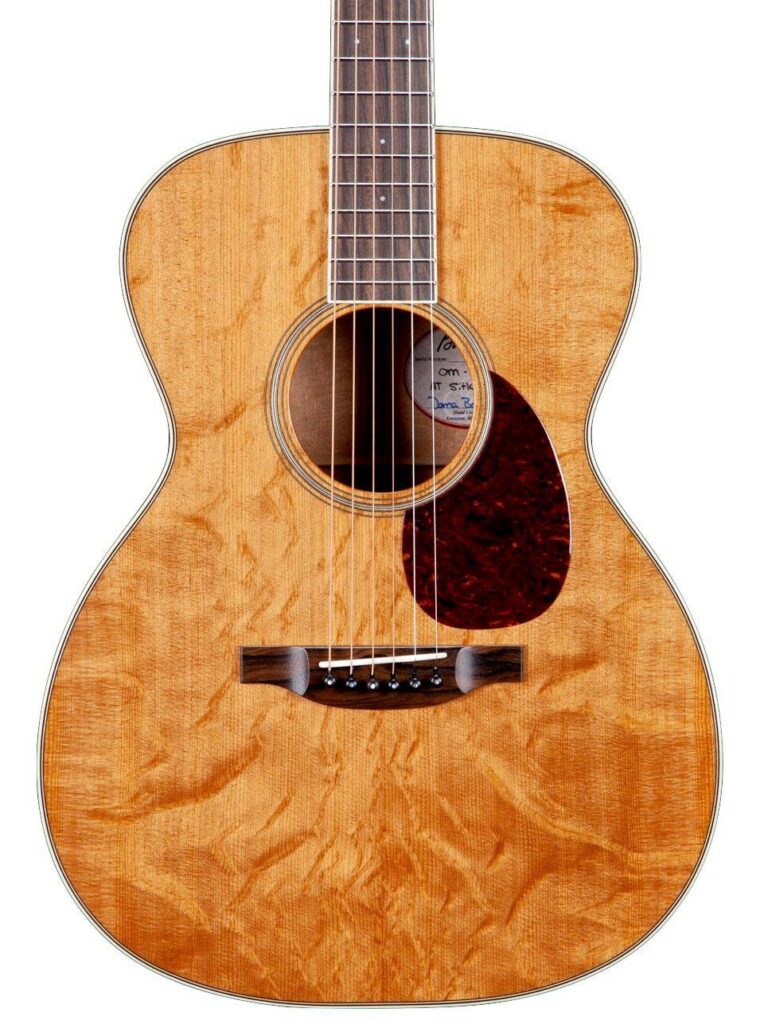

The commercialization of bearclaw is in fact a microcosm of the soundboard industry’s trajectory against a backdrop of increasingly scarce resources. As supplies of traditional “perfect” AAAA-grade wood with straight grain and even color continue to shrink, the industry has successfully repackaged aesthetic variations once considered “defects” (such as bearclaw and uneven color) as sought-after “character” features, reducing waste and advancing sustainability.
Chapter 5: Bearclaw in Practice: A Showcase of World-Class Lutherie
Theoretical analysis and market assessment must ultimately be embodied in real products. This chapter showcases how the world’s leading guitar makers apply and market bearclaw spruce across their product lines. From specific models and design philosophies, we can see how different brands use this distinctive wood to express their brand values and level of craftsmanship.
5.1 C.F. Martin & Co.
As a historic guitar maker, Martin’s use of bearclaw reflects a blend of tradition and customization.
- Where it is used: Martin mainly uses bearclaw tops on its Custom Shop instruments, special limited editions, and occasionally on high-end standard models (such as the 28 series). It offers several spruce options, including Sitka spruce and Engelmann spruce.
- Grading context: Within Martin’s internal 1-8 appearance grading system, a bearclaw top is evaluated on its overall aesthetic appeal. Although once considered an anomaly, a bearclaw top that a grader judges to be beautiful can today be graded 7-8 and used for top-tier models such as the 45 series.
5.2 Taylor Guitars
Taylor Guitars has long led the industry in promoting woods with distinctive visual features, in line with its corporate philosophy of sustainability.
- Embracing uniqueness: Taylor regards the use of visually distinctive wood as part of its environmental commitment to reduce waste. Bearclaw fits this philosophy perfectly.
- Custom and limited models: Taylor makes extensive use of bearclaw tops in its Custom Shop and special “Catch Event” limited models, often pairing them with exotic back and side woods (such as black limba or bocote) to create visually stunning high-end instruments.
5.3 Collings Guitars
As a premier boutique builder, Collings is renowned for its exacting selection of wood. Its use of bearclaw represents a deliberate pursuit of tonal excellence.
- A boutique choice: Collings uses bearclaw tops on its guitars — especially Adirondack bearclaw — which in itself signals that the wood is considered tonally exceptional.
- A collector’s piece: The most extreme example is the Collings SJ-41, whose top is made from a reclaimed wood known as “Alaskan Bearclaw Blue Sitka Spruce”. This wood lay submerged underwater for decades, taking on a unique blue hue through oxidation, while its sugars crystallized. This gives the guitar a unique story of history, rarity, and tonal maturity — elevating it to the status of a work of art. The example perfectly illustrates how bearclaw can become part of a larger narrative that creates enormous added value.
The ways in which different manufacturers use bearclaw also reflect their respective core brand identities. Martin, within its traditional, heritage-based product line, uses bearclaw to add a touch of custom exclusivity and uniqueness — a premium variant on classic models such as the HD-28. Taylor weaves bearclaw into its modern, forward-looking brand narrative, linking it to innovation and sustainability and usually pairing it with non-traditional woods to project its boundary-pushing image. Collings’s “blue spruce” case takes bearclaw’s value to a new dimension: not merely the figure itself, but the entire history and story behind it. This is classic luxury boutique marketing, where provenance and narrative matter as much as the material itself. Bearclaw is therefore not a single feature but a versatile element, strategically deployed by major brands to reinforce their particular market positioning and brand stories.
Chapter 6: The Owner’s Perspective: Considerations for Discerning Players and Collectors
For consumers considering a guitar with a bearclaw top, understanding the science and the market is not enough; practical, in-use considerations also matter. This chapter offers prospective buyers practical advice and context covering aesthetics, structural integrity, and buying strategy.
6.1 The Subjectivity of Beauty
The aesthetic appeal of bearclaw is highly subjective and often polarizes opinion.
- A polarizing look: Many players find bearclaw exceptionally beautiful and distinctive, giving the guitar a strong personality. They appreciate this natural, one-of-a-kind mark.
- A preference for tradition: At the same time, a considerable number strongly dislike the look, viewing it as a blemish, a visual distraction, or “ugly” compared with clean, straight, traditional spruce grain. This is purely a matter of personal taste, with no right or wrong. Before making a decision, buyers must determine whether they genuinely like the look.
6.2 Long-Term Stability and Durability
There are contradictory theoretical speculations about the long-term structural stability of bearclaw tops, but a lack of hard evidence.
- The advantage of stiffness: The greater stiffness associated with bearclaw has given rise to anecdotal claims that such tops may be less prone to cracking. The logic: a stiffer top is naturally stronger.
- Concerns about interrupted grain: The opposing view holds that any feature interrupting the wood’s straight, parallel grain could in theory introduce stress concentration points, or make the top more challenging to work.
- No evidence of instability: Despite these theoretical concerns, there is no substantial evidence from luthiers or repair experts that bearclaw tops are inherently less stable or more crack-prone than standard tops. A guitar’s long-term health depends overwhelmingly on the quality of its construction and proper humidity control afterwards.
A logical confusion often arises in discussions of bearclaw’s durability: conflating the wood’s working properties with its long-term structural properties. A luthier may note that figured wood is “harder to work” than evenly grained wood — a comment on the manufacturing process. Players, meanwhile, speculate on forums about its long-term stability and crack resistance — a comment on the durability of the finished instrument. The two are not the same. A piece of wood that is challenging to bend or carve (working property) may exhibit excellent strength and stability once integrated into a braced, finished structure (structural property). The absence in the real world of widespread reports of structural failure in bearclaw tops suggests that, while it may pose challenges during construction, it does not make the instrument inherently unstable. Distinguishing the challenges faced by the luthier from the risks borne by the owner is therefore essential.
6.3 Buying Guide
Drawing all of the above together, the following strategic advice is offered to prospective buyers:
- Sound and playability first: Experienced players and luthiers agree that the instrument’s tone and playability should always take precedence over its looks. A guitar that sounds great is a good guitar, whether or not its top bears bearclaw.
- Assess the whole: Bearclaw can be an indicator of high-quality wood, but it is no substitute for a thorough evaluation of the instrument as a whole. Buyers should inspect the overall workmanship carefully, listen to the guitar’s actual sound, and confirm that they genuinely appreciate its aesthetic style.
- Investment and resale value: For collectors, a guitar from a reputable maker with a striking, beautifully distributed bearclaw top can be a sound investment. Its uniqueness and rarity can enhance its appeal and resale value on the secondhand market.
Chapter 7: Conclusion: Synthesizing the Art, Science, and Commerce of Bearclaw
Through this multi-dimensional analysis of bearclaw spruce, this report has revealed the complexity and significance of this distinctive wood feature. It is not merely a visual ornament but the outward expression of the wood’s internal physical structure — a meeting point of natural art, acoustic science, and commercial value.
The core conclusions of this article can be summarized as follows:
- Science confirms the change in physical properties: Bearclaw is the macroscopic manifestation of the microstructural anomaly of indented growth rings. Scientific research confirms that this structure causes measurable changes in the wood’s physical properties, including increased stiffness in specific directions and reduced anisotropy. These changes match the “harder”, “brighter” behavior long observed by luthiers, providing a solid physical basis for its acoustic potential.
- The complexity of tonal influence: Although the physical properties change, bearclaw’s direct contribution to the final tone of a finished guitar remains a nuanced issue that is difficult to verify in isolation. Its effect on tone may be moderated or masked by numerous other build variables (brace carving, soundboard thickness, and so on). The most rigorous conclusion, therefore, is that bearclaw is a reliable indicator of a superior soundboard, not an absolute guarantee of any particular tone.
- A successful revaluation by the market: The commercial journey of bearclaw exemplifies the soundboard industry’s revaluation of value in response to changing resources. It transformed from a discarded “flaw” into a desirable feature representing uniqueness, rarity, and premium quality. This transformation has raised the market value of both raw material and finished instruments, and reflects the industry’s mature strategies in sustainability and marketing.
- A symbol of brand identity: The world’s top manufacturers use bearclaw in different ways as part of reinforcing their own brand narratives. Whether it is Martin’s traditional customization, Taylor’s modern innovation, or Collings’s boutique storytelling, bearclaw plays a key role, proving its flexibility and powerful appeal as a premium element.
In summary, bearclaw spruce occupies a unique and important place in acoustic guitar making. For players and collectors, it offers visual distinctiveness, a captivating natural story, and an association with outstanding wood quality. When choosing a guitar with a bearclaw top, the final decision should rest on one’s combined preferences for tone, playability, and aesthetics. What is certain, however, is that this beautiful “flaw” has become, and will remain, a fascinating and valuable element in the world of top-tier acoustic instruments. It perfectly illustrates how, in the finest instruments, nature’s randomness, scientific rigor, and human aesthetic aspiration coexist in harmony.
This article is original content. Reproduction requires the author’s prior permission, must prominently credit the author and the original source, and must not alter the content.


-10--scaled-e1787801713475-110x80.jpg)