


German PLEK technology · Measure, preview, process
PLEK turns small differences in neck, fingerboard and fret geometry into useful measurements, then helps put a suitable setup into practice. For players, that can mean more comfortable action and a more even feel across the neck. For builders, it creates a measurable, repeatable basis for fretwork and quality checks.
Match string clearance to playing comfort and picking strength.
Identify local high frets and inconsistencies along the neck.
Measure and preview before deciding what to cut.
Use recorded measurements to support production and inspection.
Explore PLEK
01 · What PLEK does for playability
Stiff fretting, buzzing in a particular area or a note dying during a bend can come from fret heights, neck relief or a setup that does not suit the instrument. PLEK helps identify the specific geometry behind those problems.
Lower action often feels easier, but a vibrating string still needs clearance. A light fingerstyle touch and a strong strumming attack may require different settings. The aim is a suitable balance for the player, rather than one minimum action figure for every guitar.
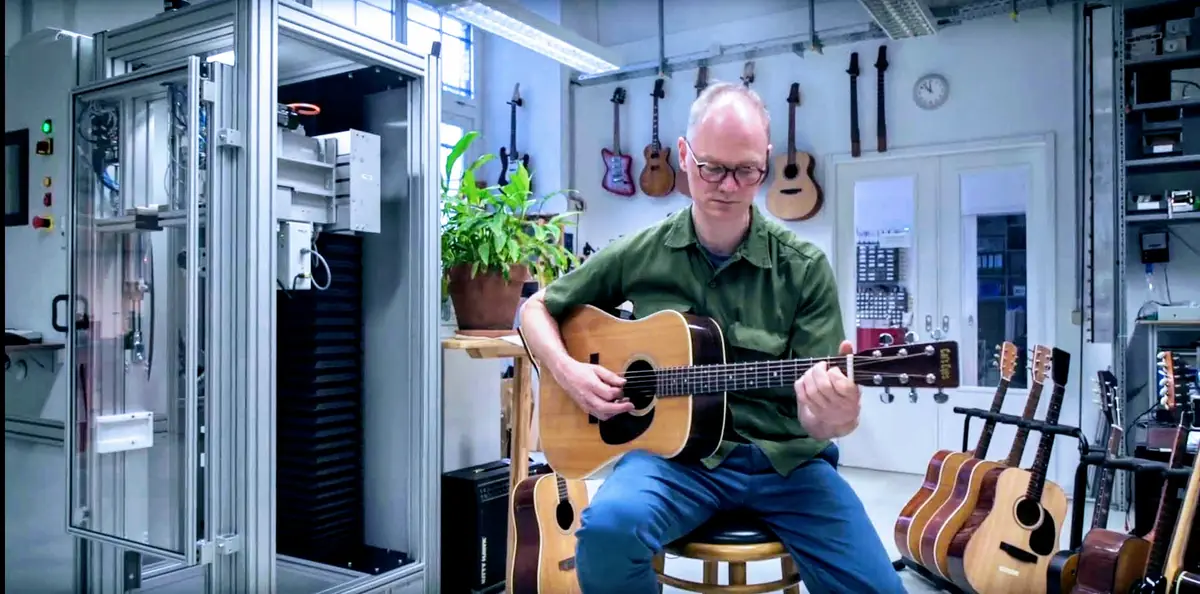
Official reference:PLEK · Plek for Guitarists · Image: PLEK
02 · Start with the neck under tension
A neck changes shape under the pull of tuned strings. Removing the strings can change its relief, so an unloaded fingerboard does not show the complete geometry of the instrument as it is played.
The PLEK Station can scan under real string tension; a PLEK Pro production process can use STS to simulate the load. Measurements record the relationship between action, nut, fingerboard and frets, helping the technician locate the cause before adjusting the neck or planning fretwork.
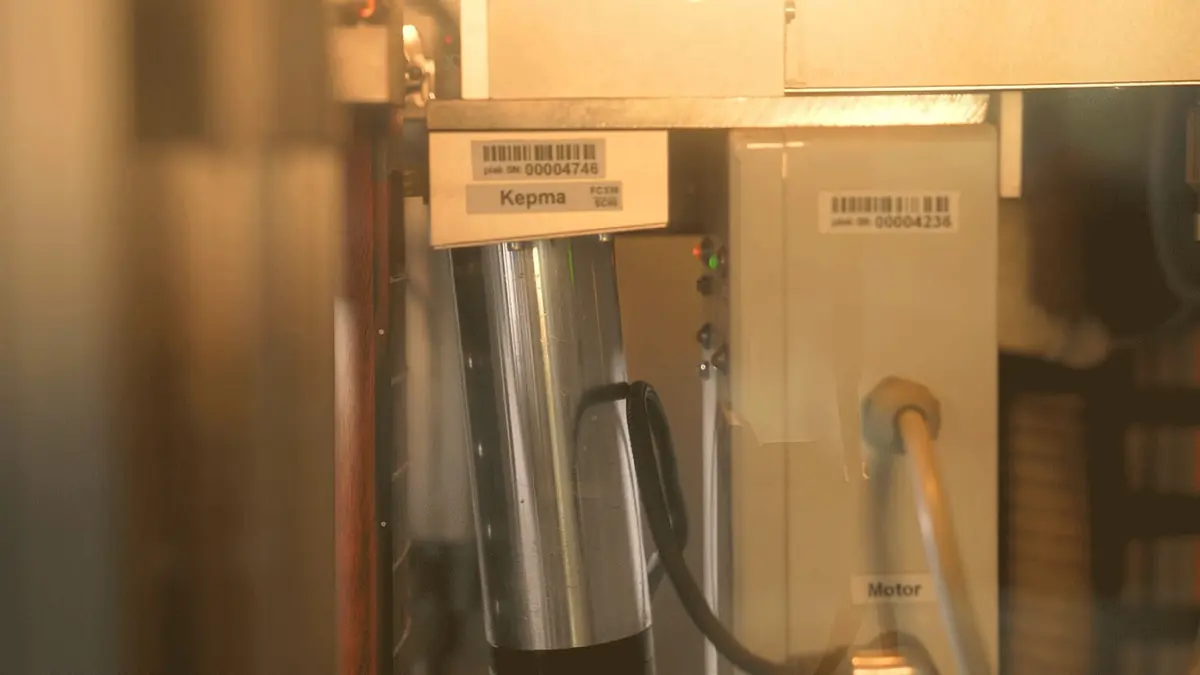
Official reference:PLEK · The Scan · Image: Kepma
03 · How to read a PLEK scan
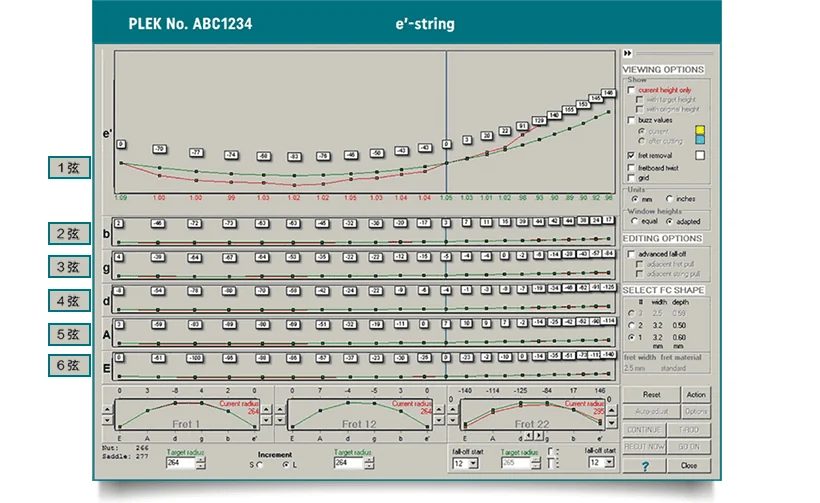
Results can be examined for each string at every fret position, then combined to reveal the overall pattern. A locally high fret may interfere with the vibrating string; the graph makes the variation easier to see.
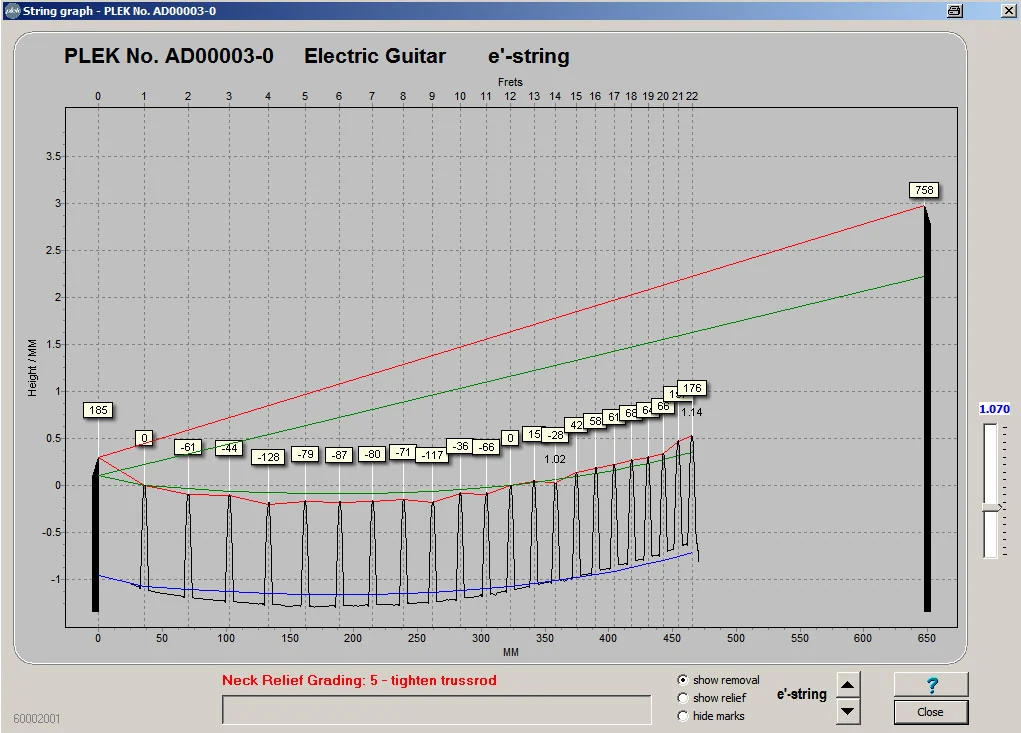
- Blue curve: recommended fingerboard relief, providing a reference for truss rod adjustment.
- Wavy red curve: current fret heights. The straight red line shows current action.
- Green curve: the recommended fret curve. The straight green line shows target action.
- Magnified fret outlines: highlight local differences. The final work plan still needs the technician’s judgement.
Official reference:PLEK · The Scan · Image: PLEK
04 · Virtual Fret Dress: preview before cutting
Once the instrument is scanned, the technician can explore a proposed fret dress in software. VFD can set the amount of material to remove, the radius of the fret plane and fall-off at the upper frets.
Nothing is cut during the simulation. Seeing high and low areas before choosing a target helps limit unnecessary material removal. On worn frets, measurements and preview also help the technician assess whether dressing is sufficient or a partial or complete refret is appropriate.
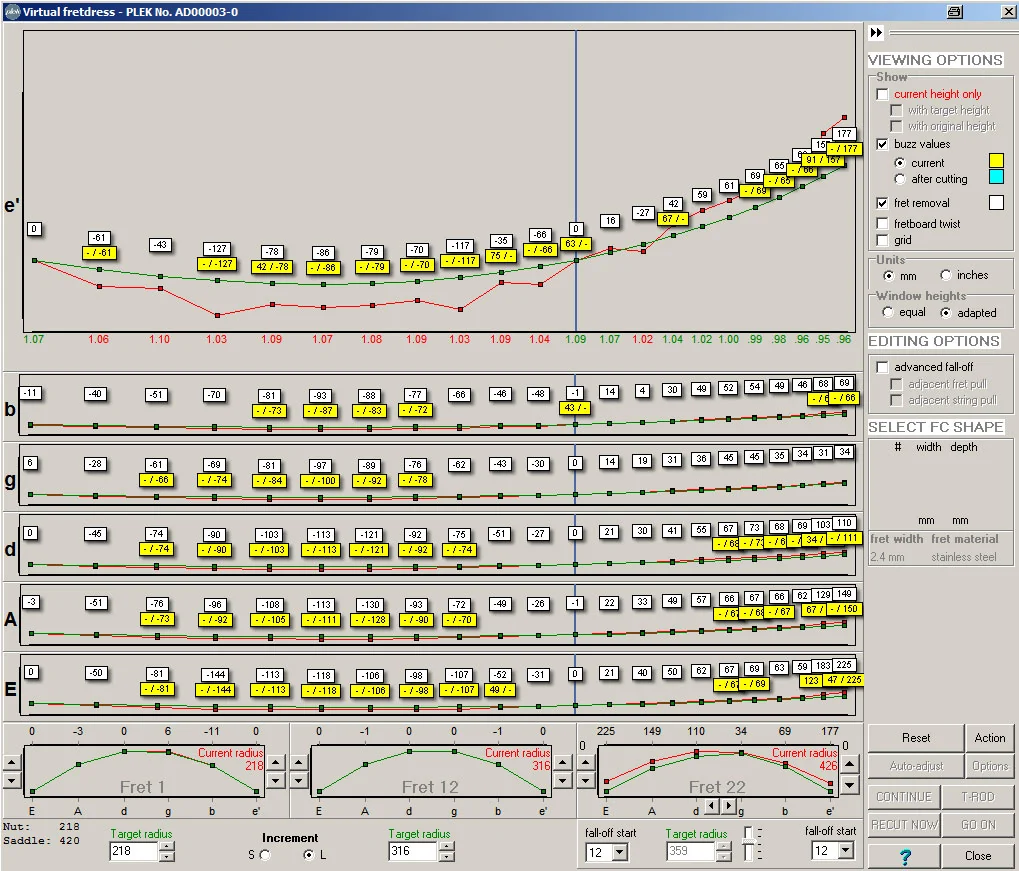
Official reference:PLEK · Virtual Fret Dress · Image: PLEK
05 · Precision processing and final checks
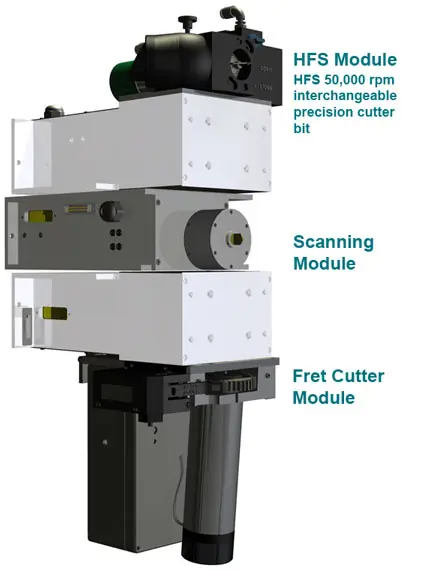
After the parameters are approved, the machine carries out the selected work. PLEK lists fret dressing and crowning, fingerboard work, nut-slot and surface cutting, and saddle-related operations among its capabilities. Every instrument does not need every operation.
Processing is followed by the appropriate finishing, stringing, setup and play check. An optional final scan can review and document the resulting geometry. Measurements and practical playing feedback together determine whether the intended result has been achieved.
Official reference:PLEK · Processing · Image: PLEK
06 · Why nut slots matter in the first position
If nut slots are too high, first-position fretting can feel demanding even when action farther up the neck is suitable. Slots that are too low may create open-string buzz. First-position comfort therefore cannot be judged from saddle height alone.
PLEK can cut nut slots at specified angles and depths, informed by measurements for the individual strings. The technician also considers string gauge, nut material and the intended setup. Nut, saddle, neck relief and fret plane need to be checked together.
Official reference:PLEK · Plek Station · Image: Kepma
07 · STS: simulate the load without strings
STS means String Tension Simulation. Adapters and a computer-controlled pneumatic system apply a predefined load so the neck and truss rod respond in a way comparable to normal string tension.
An external STS can help set neck relief before processing; an internal STS works with the PLEK Pro process. Model templates store the relevant parameters. This allows unstrung instruments, or necks on their own, to be processed under a simulated playing load and helps coordinate production steps.
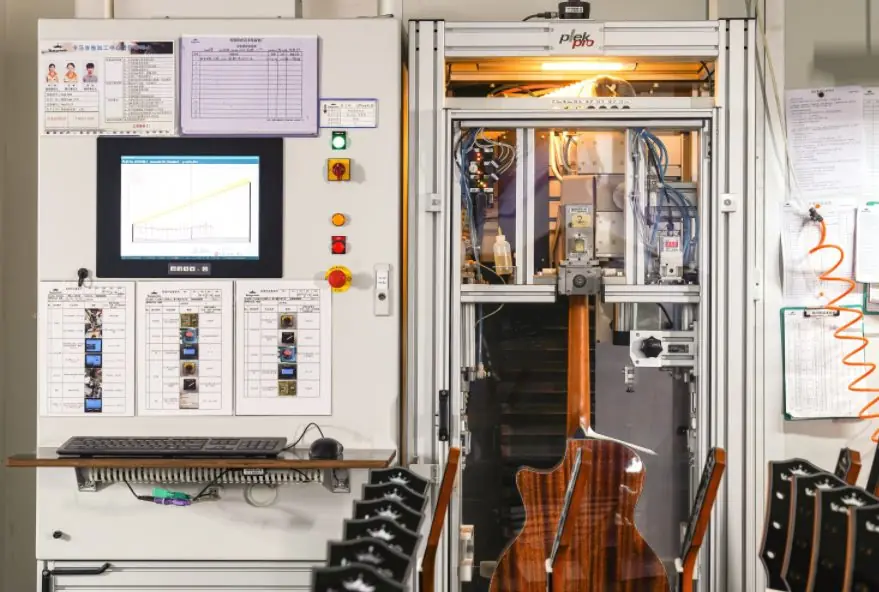
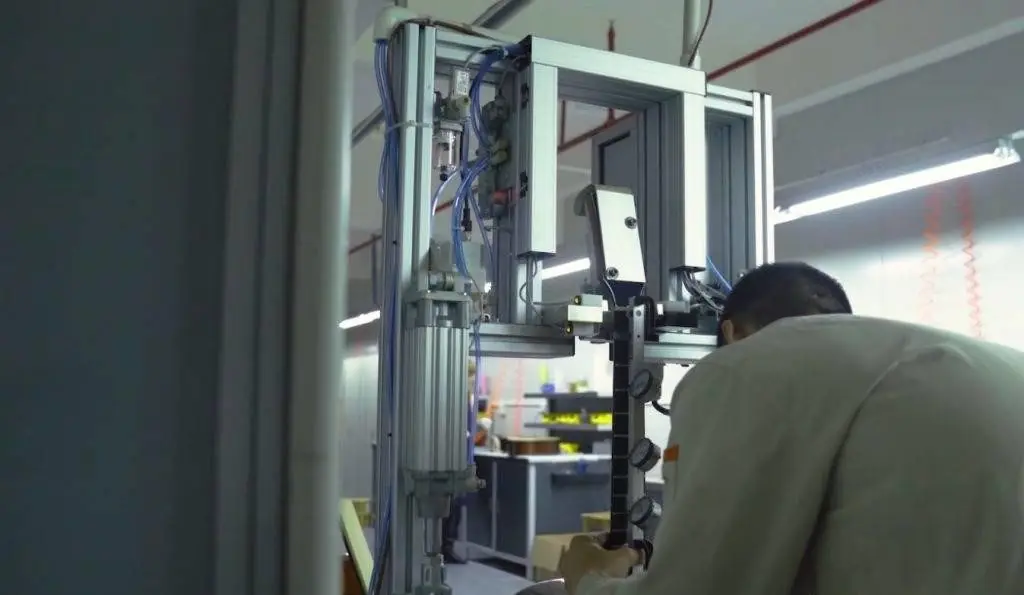
Equipment and work at Kepma. Simulated tension brings processing closer to strung playing conditions.
Official reference:PLEK · STS · Image: Kepma
08 · Benefits a guitarist can feel
An instrument with uneven frets or a poor setup may show a clear improvement. A guitar already in good condition may change more subtly. The useful result is the resolution of specific problems and a setup appropriate for its player.
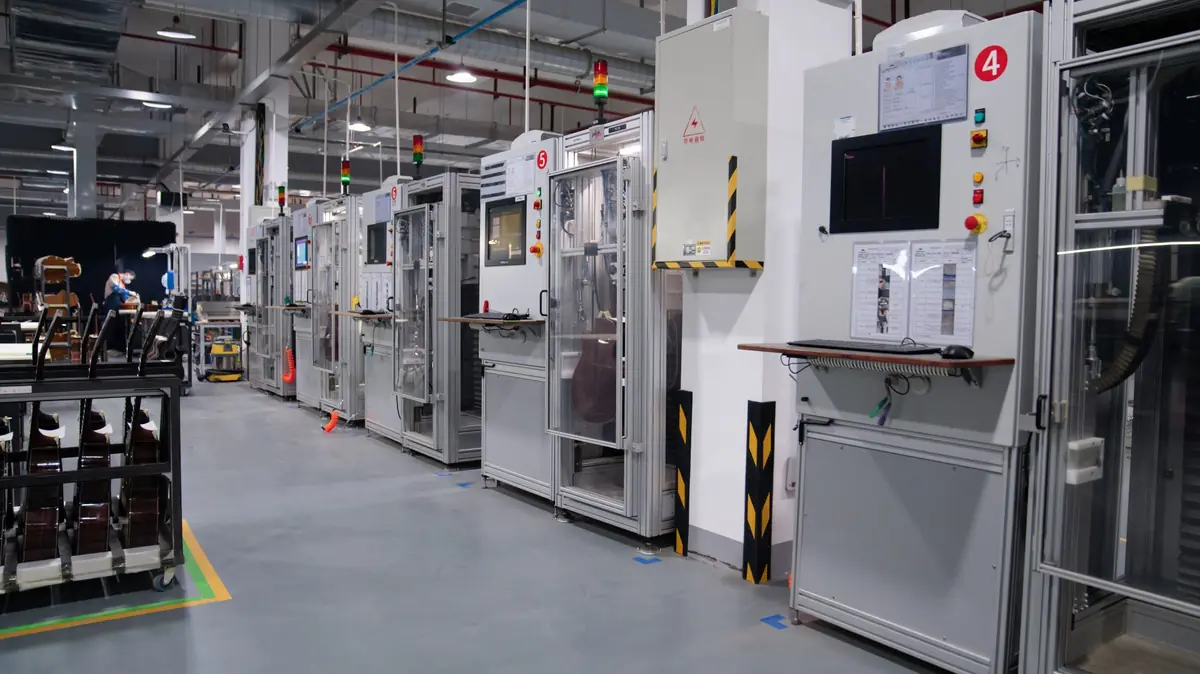
- Action matched to playing strength, reducing avoidable fretting effort within suitable string clearance.
- More focused diagnosis of buzzing and local fret-height differences.
- A more coordinated feel along the neck through appropriate relief and fret geometry.
- Before-and-after records that support later checks and setup discussions.
PLEK primarily addresses playability and setup quality. It does not replace practice, and a PLEK job does not guarantee zero buzz under every attack and environmental condition.
Official reference:PLEK · Plek for Guitarists · Image: Kepma
09 · PLEK Pro and production consistency
For manufacturers, PLEK Pro also supports quality control and development. Measurements and graphic displays can help study truss rod behaviour, compare fingerboard geometry and investigate the effects of humidity, assembly and gluing processes.
Model templates, process parameters and historical records make work easier to repeat and variations easier to trace. Data supports improvements, while each instrument still needs assessment of its materials, processing results and final playing performance.
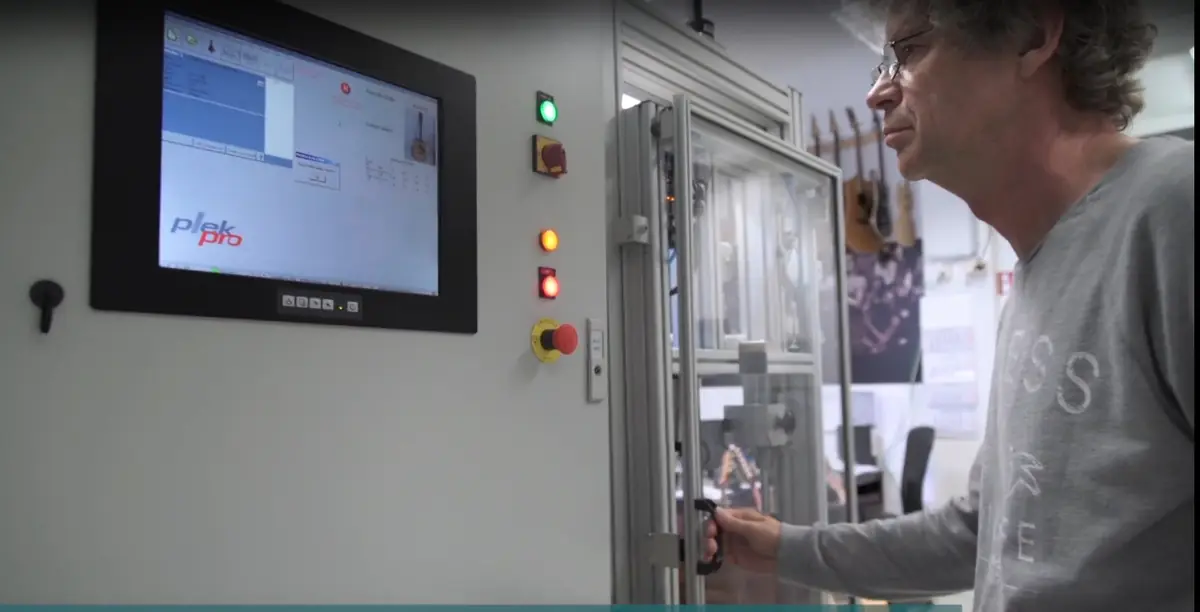
Official reference:PLEK · Plek Pro · Image: PLEK
10 · Station, Pro and Scanner: different roles
PLEK Station is designed for flexible repair, custom building and instrument processing, with both scanning and machining capabilities. PLEK Pro focuses on production and can combine STS, model templates and automatic tool changes to support repeatability.
PLEK Scanner is a laser-based, touch-free measuring device for quality checks, repair intake, retail evaluation and development. Measuring and machining are different tasks: receiving a scan report does not mean fret dressing has already been carried out.
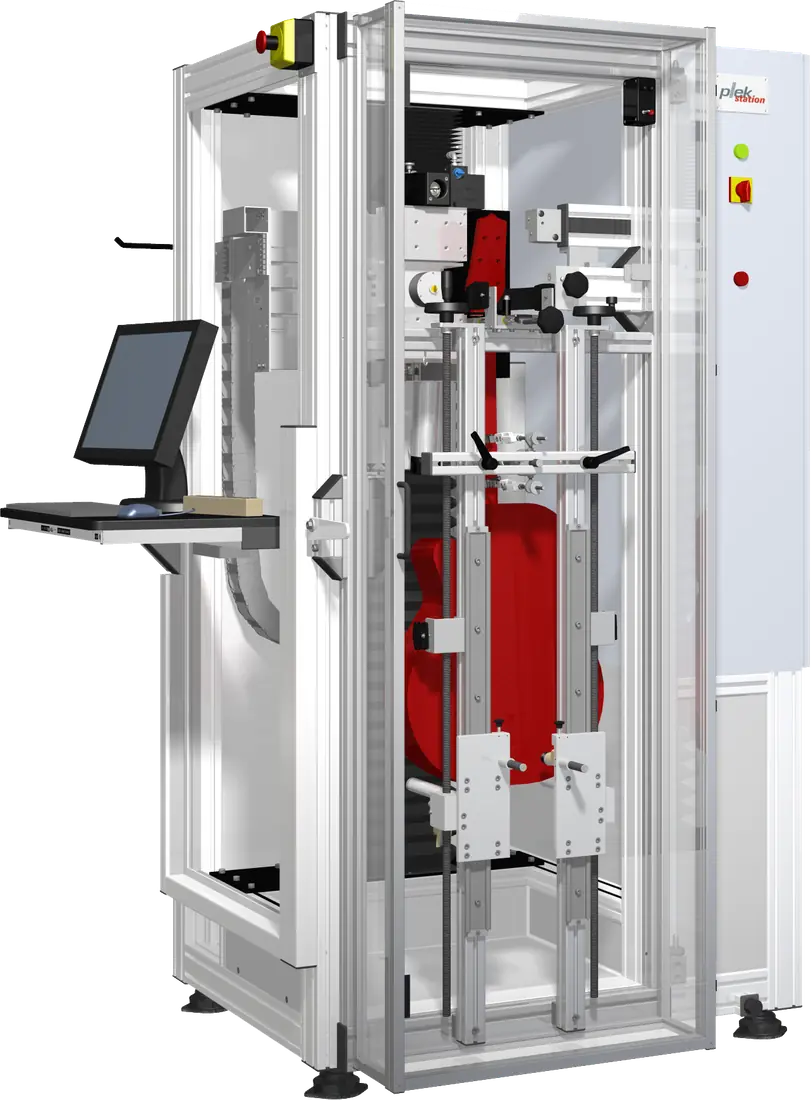
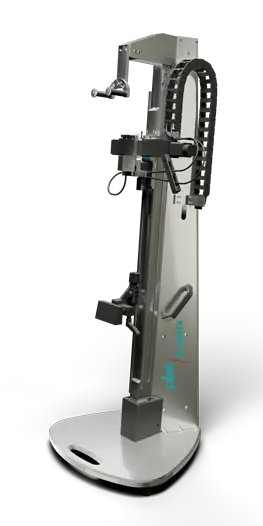
PLEK Station (left/top) measures and processes instruments. PLEK Scanner (right/bottom) provides measurement and evaluation.
Official reference:PLEK · Plek Scanner · Image: PLEK
11 · PLEK at Kepma: precision meets finishing
Kepma uses PLEK within its guitar manufacturing workflow, working on the relationship between neck relief, fret condition and nut setup, then combining the results with finishing, stringing and practical play checks. Refer to the individual product information for each model’s process specification.
PLEK itself stresses that the machine does not replace a luthier’s experience and craftsmanship. People choose the playing target, approve the parameters and assess the finished feel. The equipment supports the measurable, repeatable work that helps turn those decisions into a playable instrument.
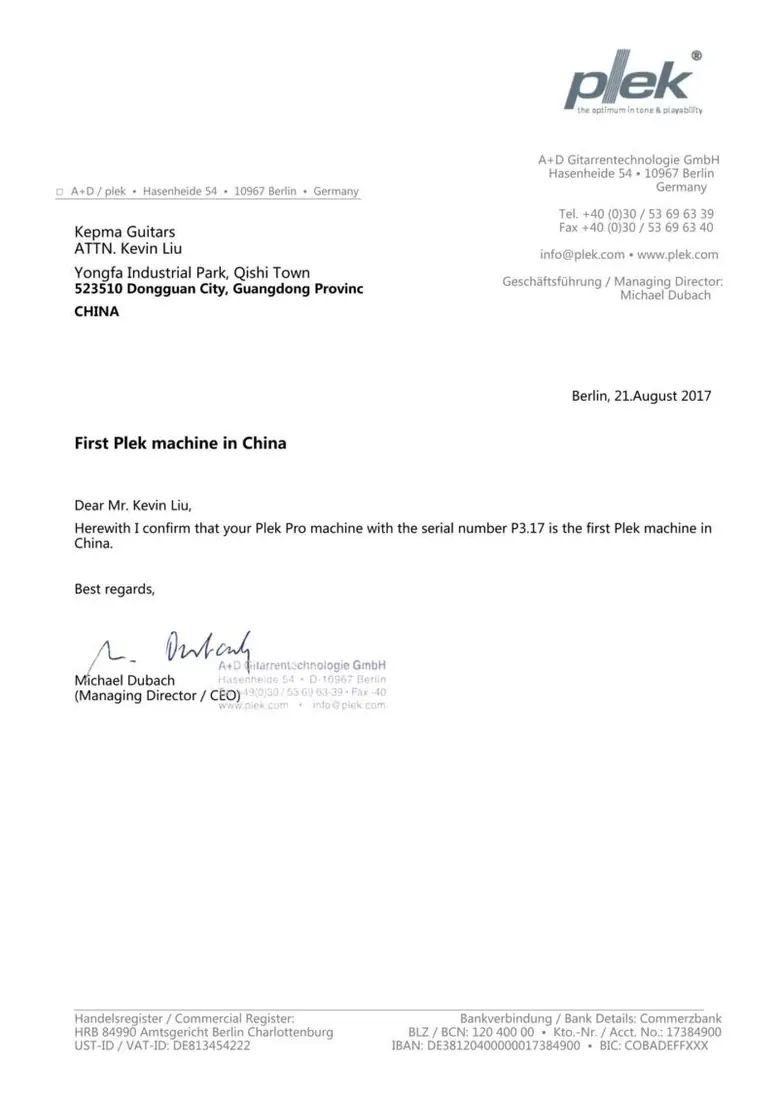
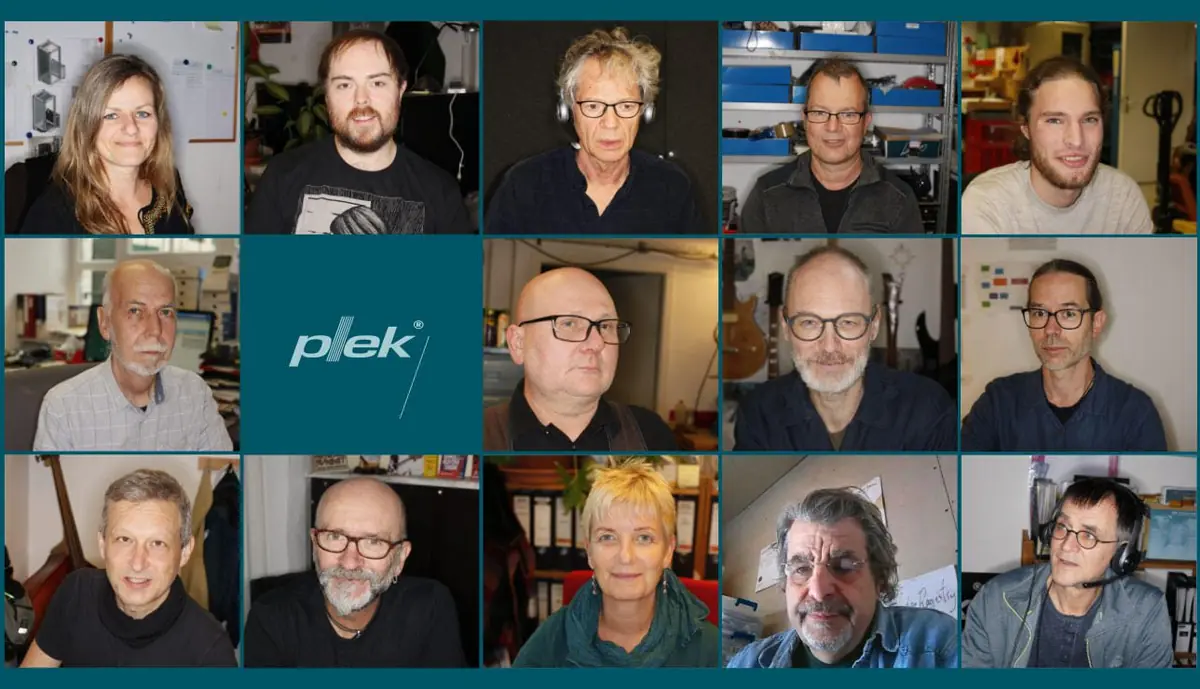
Correspondence from PLEK to Kepma and a PLEK team photograph. Technical exchange and manual finishing contribute to the playing experience.
Official reference:PLEK · Plek Station · Image: Kepma
12 · Common questions about PLEK
Is the lowest action always best?
Action depends on attack, strings and preference. A stronger attack usually needs more clearance. The lowest number is not automatically the most suitable feel.
Does an already comfortable guitar need further work?
Start with its condition and your needs. PLEK explains that improvements may be subtle on a well-set-up guitar; a diagnostic scan helps inform the decision.
Should I check the setup after changing gauge or tuning?
Watch for changes in feel. Different tension can affect neck relief, so action, neck and nut relationships may need reassessment.
Can severely worn frets always be dressed?
No. Remaining height and wear affect the options. Scan data and virtual dressing can help assess whether a partial or complete refret is needed.
Does PLEK guarantee a better tone?
Its stated focus is playability, accurate setup and quality control. Easier playing can help expression, while tone also depends on construction, materials, strings and technique.
How do I maintain the result?
Care for the storage environment and strings. If action or buzz changes noticeably, assess humidity and neck relief and seek a technician’s judgement. Wood remains responsive to its environment.
Official reference:PLEK · Plek for Guitarists · Image: Kepma