Guitar Stories · People

She Xiang is an original musician signed exclusively to NetEase Cloud Music, a fingerstyle guitarist and a music educator. Her songs include She Always, Singer Xiao Chen, Come to Xinjiang with Me and What’s Inside the Guitar? Her work has been shared and noticed by musicians including Chen Li and Da Bing. Several of her original tracks have tens of thousands of saves and more than 999 comments, with over five million plays across platforms.
Grandma stands in the courtyard, looking fondly over her garden
Sunlight falls softly on her face, revealing the beautiful marks of time
Grandma sits outside the grocery store
Watching the passing traffic, sometimes remembering days gone by
…
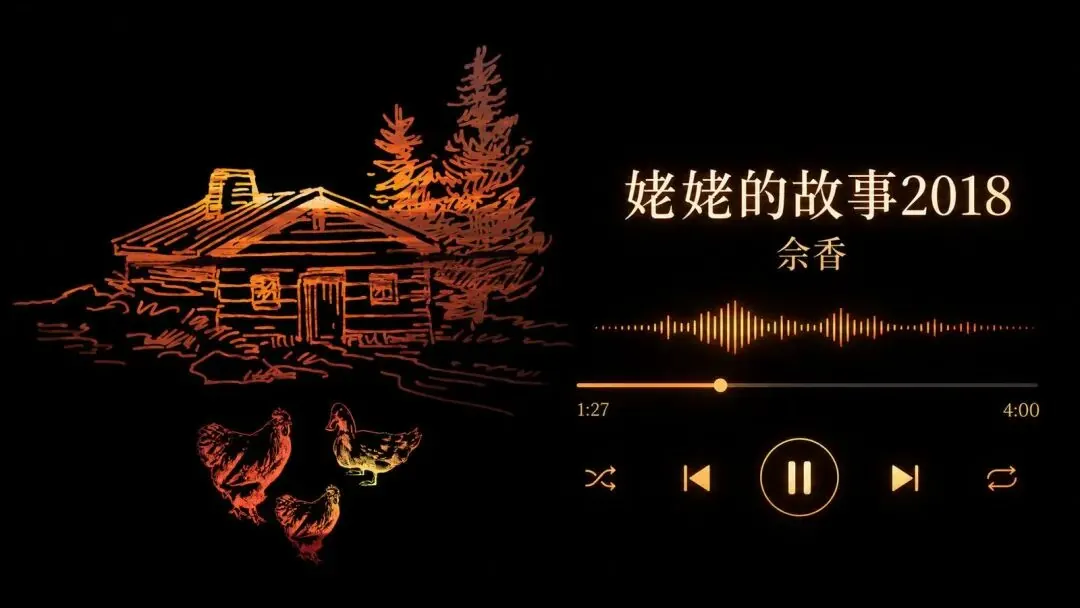
In 2017, while studying at university in Wuhan, She Xiang wrote Grandma’s Story. Her grandmother was still alive then. Whenever the family gathered for holidays, someone would ask her to pick up her guitar and sing it. Its bright melody accompanied their reunions and recorded her grandmother’s long, ordinary life.
Her grandmother passed away in 2024. After that, She Xiang stopped singing Grandma’s Story.
In 2026, she returned to the song. Keeping the original melody but removing all the lyrics, she arranged it as a fingerstyle instrumental and renamed it Grandma.
That July, She Xiang gave the first public performance of the new arrangement as a special guest at the Guangzhou stop of Wang Yemin’s national tour, organized by Kepma Guitars. Her sensitive, heartfelt playing drew a warm response from the audience.
Through this fingerstyle piece, we would like to introduce She Xiang, a musician from Xinjiang with a love of guitar and songwriting, and share her story with the instrument.
1. The beginnings of a songwriter
She Xiang was born into an artistic family in Qitai, Xinjiang. Her earliest musical memories come from the family cassette recorder, which often played recordings of her father singing Annie with his guitar. Family stories say it was his guitar playing that won over her mother, who loved writing. Later, when an electronic keyboard arrived at home, her father often played Colorful Clouds Chasing the Moon and The Girl from Dabancheng for her.
Growing up surrounded by music, She Xiang began learning piano as a child. Looking back, she describes those first lessons as something she was “made to do”: the instrument she really wanted to learn had always been the guitar. Only after she passed her Grade 10 piano examination did her parents agree to buy her one. She still remembers playing her first C-major arpeggio: “This is wonderful. This is what I want.”
From then on, the guitar became her constant companion. She also gained her first devoted listener: her grandmother.
Her grandmother’s favorite request was We Can Only Savor the Past. At the time, She Xiang simply thought she liked the song and did not consider what it might mean to her. Later, reading The Years of Burning Passion, a piece her mother wrote for a local chronicle, she learned more about her grandmother’s past and began to understand the song’s possible significance.
In the 1960s, many people left familiar hometowns to build new lives in unfamiliar places. Her grandmother was among them, traveling to Xinjiang with young people from Shanghai, Jiangsu and elsewhere to take part in agricultural reclamation and frontier defense.
Living conditions in Xinjiang were much harder then. Irrigation channels had to be dug and land reclaimed; so much had to be built from scratch. Her grandmother put down roots there. Tough and determined, she supported her own family and readily helped neighbors in need. This woman from Jiangnan, south of the lower Yangtze, earned the wholehearted respect of many of the men around her.
Decades later, she had become a true woman of the rural northwest: energetic, decisive and happy to ride a motorcycle through the countryside. When the children wanted to find her, they had to shout at the top of their lungs from the fields. Gentle expressions of concern did not come easily to her. If the family table was too crowded, she would get up to give a younger relative her seat, saying, “You’re all too noisy for me!”
To She Xiang, it was hard to connect her grandmother with the waterways of Jiangnan or the soft sounds of its dialects. “Time slips away, never to return…” There must have been so many stories hidden in those vanished years.
Whenever she later played We Can Only Savor the Past for her grandmother, She Xiang thought of the events in her mother’s writing that she had never experienced herself. She tried to hear the song from her grandmother’s perspective. Gradually, she realized that the same melody can mean very different things to different people. Behind it lie individual experiences and stories that have never been told.
That realization slowly shaped her understanding of music. Playing other people’s work was no longer enough; she began writing about her own experiences, familiar people and places. Her first original song, Come to Xinjiang with Me, sought to help others understand the real Xinjiang. Written before she left home to study, it was also a song for the place where she had spent her childhood.
2. Writing the people around her into songs
At university, She Xiang began writing more often. Sometimes an idea would come to her and she would pick up her guitar and make it into a song. With no fixed subject matter or deliberate pursuit of complicated expression, much of her work grew directly out of life.
Grandma’s Story was written during that period. It contains two special musical quotations: one from her grandmother’s favorite, We Can Only Savor the Past, and another from Our Xinjiang Is a Wonderful Place. One was an old song her grandmother often heard; the other celebrated the place where She Xiang grew up. Together, the melodies recorded the worlds familiar to two generations.
Grandma’s Story eventually became the regular soundtrack to family gatherings. She Xiang loved that feeling: creating for the people around her and performing for them too.
By then, her music had reached a wider audience. She released songs online and received attention and shares from Chen Li, Da Bing and Liusheng Wanju, among others. She later signed exclusively to NetEase Cloud Music, with one single exceeding five million plays. After graduation, she also worked as a guest artist for Wuhan Radio and took her original songs to live music venues in ten cities.
Moving from campus performances to audiences of strangers, she gradually found her own creative rhythm. She rarely searches for grand subjects just to write a song. Her hometown, mother, grandmother and the people she meets in everyday life can all be a starting point.
3. When she could no longer sing it, she played it
After her grandmother died in 2024, She Xiang never sang Grandma’s Story again. It was not until 2026, while systematically revisiting her earlier music, that she confronted the song she had written almost a decade before. She tried rearranging it, only to find that returning to it was far harder than she had expected.
“Those simple, everyday words are all about my grandmother’s ordinary life,” she says. “Once she was truly gone, I could no longer just open my mouth and sing them easily.”
If she could not sing it, she would play it. She decided to retain the melody, remove all the lyrics and turn the guitar-and-vocal song into a fingerstyle instrumental.
Over the years, moving from Xinjiang to Wuhan and then Zhuhai, She Xiang had also experienced leaving home and starting again in unfamiliar cities. With age and experience, looking back at her grandmother’s journey from Jiangnan to Xinjiang brought a different understanding.
“When we think of our grandparents, most of us remember the warmth and closeness between generations. Often, only after achieving something or facing difficulties do we begin to understand that they left us more than affection. They also passed on the resilience, courage, quiet dedication and sacrifice of their time. This piece is no longer just the gentle folk song I wrote at twenty. Through instrumental music alone, I hope to honor the spirit and contributions of that generation.” — She Xiang
She redesigned the structure and playing approach throughout. In the opening four bars, she uses Low C tuning and a slide between two notes to imitate calling out “Grandma!” at the roadside in Qitai as a child. The introduction leaves plenty of space, seeking a guqin-like atmosphere. Two four-bar phrases, one at the beginning and one at the end, answer each other: in her conception, one is remembrance and the other farewell.
In the new Grandma, slides evoke a call and the spaces between phrases let the sound linger. Without the direct narrative of lyrics, the guitar’s tone and the details of the performance carry the emotion, leaving listeners more room to imagine.
Watch | She Xiang performs Grandma in fingerstyle
Guitar: Kepma | The K Mark WOM-0
4. Be the teacher you needed when you were young
She Xiang now lives in Zhuhai. Alongside writing and performing, she founded a music education center with two like-minded friends. They named it He Yu Ri, “Seedlings and Sun,” representing students and teachers respectively.
On the blackboard in every classroom is the sentence: “Be the teacher you needed when you were young.” She explains that many teachers helped her as she grew up, including her schoolteachers, a mentor on her musical journey, and collaborators who became both teachers and friends. Now that she teaches too, she hopes to pass that encouragement and support on to her students.
In her teaching, She Xiang places particular emphasis on original creation. She wants students to develop habits of observing and thinking, rather than focusing only on technique or the difficulty of a piece. Learning a work can mean understanding why its composer wrote it that way and what they wanted to express, as well as learning how to play it.
When students have ideas of their own, she encourages them to record them through music. The subject need not be grand: it might be someone nearby, a small everyday event or an apparently innocent question. Her song What’s Inside the Guitar? grew out of a child’s view of the world. Things adults take for granted still hold questions worth exploring for children. Such observations can become the beginning of a composition.
Seedlings watered with care will grow toward the sun. Over several years of teaching, her students have not only created their own works but also achieved strong results in major competitions in China and abroad.
5. Epilogue
From her father’s version of Annie and her grandmother’s favorite We Can Only Savor the Past to the songs she writes for her hometown, family and students, She Xiang’s music remains closely connected to the people and life around her. Ordinary experiences and everyday feelings provide her richest material and have gradually shaped her understanding of music.
Today, she brings that understanding into the classroom, encouraging students to observe life, record it and express their feelings through music. Perhaps one day, like She Xiang before them, they too will write a song for their hometown or a melody for a loved one. And the guitar will continue to leave room in people’s lives for stories of their own.
Original article: Kepma Guitars on WeChat — Stories with Guitars: She Xiang and Grandma