plek 团队

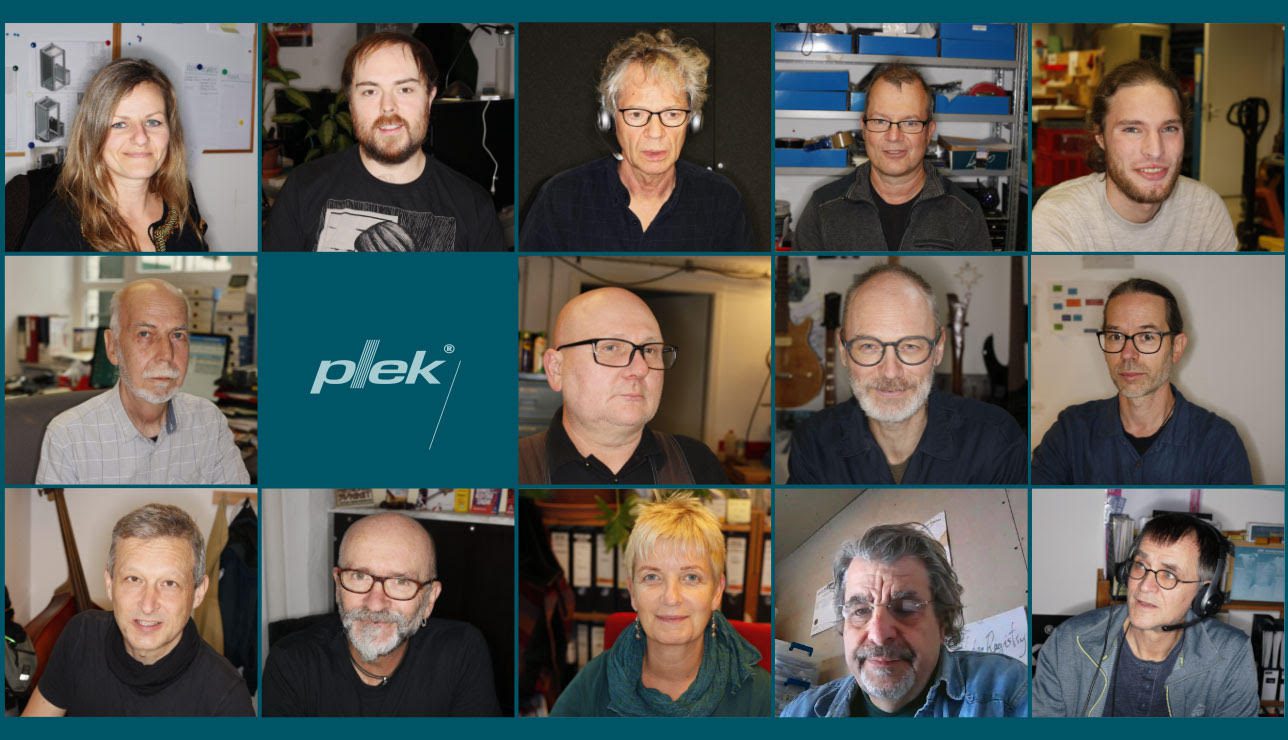
The team behind PLEK comprises luthiers, scientists, electrical engineers, guitarists, and software engineers—all united by a deep passion for music.

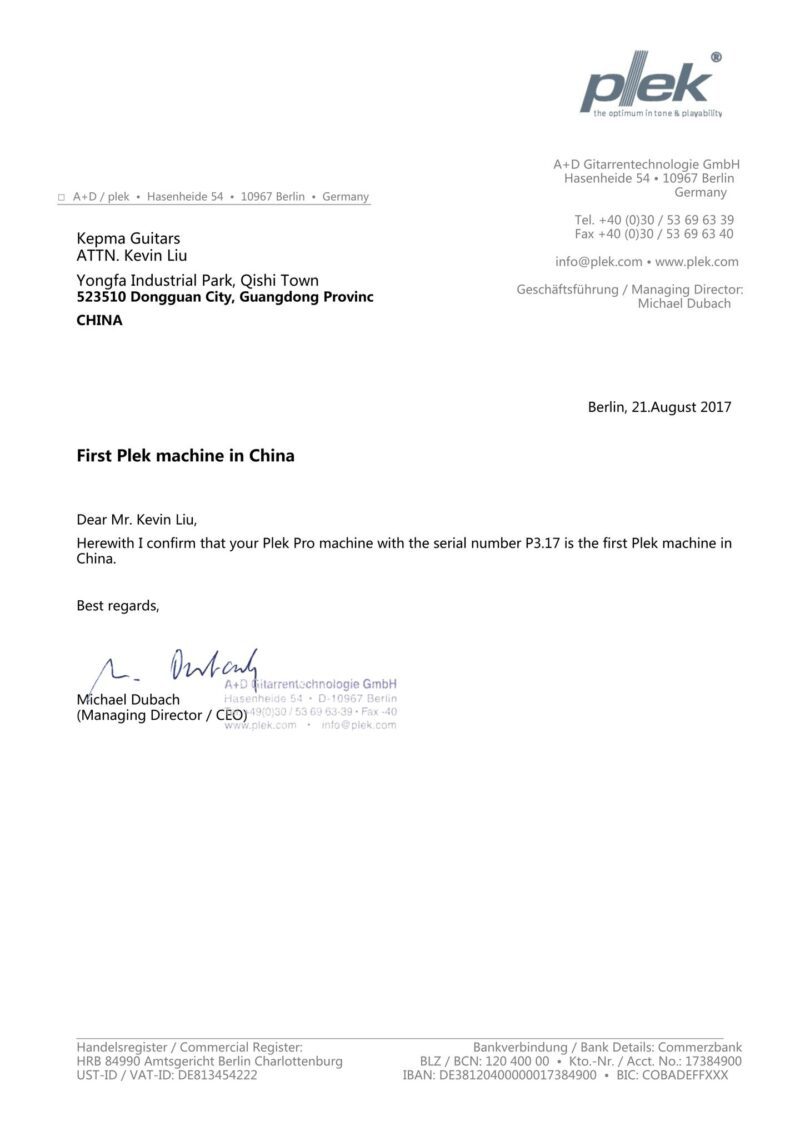
Guitar repair shops, professional musicians, and luthiers worldwide have praised guitars processed with PLEK technology. Now, PLEK has arrived in China through a partnership with Kepma, aiming to deliver superior instruments and an enhanced playing experience to musicians. Renowned brands such as Martin, Taylor, Gibson, Collings, and Santa Cruz utilize PLEK technology; internationally, a single PLEK treatment for maintenance typically costs between $250 and $300 USD.

Every mid-to-high-end guitar produced by Kepma undergoes the PLEK process followed by meticulous sanding and polishing. The instrument that ultimately reaches your hands is not merely a beautiful guitar, but one optimized for exceptional playability.

PLEK: The Art of the Fretboard—High-End Guitar Technology Made in Germany

Plek means different things to different people.

We like to view it as a question—”What creates optimal guitar playability?”—and we have turned the answer into a machine.

It represents a specific way of looking at an instrument’s fretboard, frets, and strings.

It embodies decades of research and experience, as well as an ongoing dialogue with master guitar makers.

It is a philosophy—a vision of quality and playability—and a technology.

kepma plek
Plek 扫描曲线

It handles guitar frets and nuts, helping to achieve an incredible playing feel! Believe me, once you’ve played a guitar treated with PLEK, you won’t want to go back. Tommy Emmanuel is just one of the many loyal fans of PLEK.

Joe Glaser—a senior consultant and co-founder of PLEK—personally visited China to guide us through the installation and operation of the system (accompanied by Mr. Hozen from Maestro Guitars). He walked us through everything from the physics of string vibration to the PLEK workflow and underlying principles, explaining the true significance of the technology. Joe has run a guitar repair shop in Nashville for decades, and many world-famous guitarists have had their instruments serviced there.

The pioneering scientist who first conducted in-depth research into string vibration was Helmholtz (though his work focused on the violin, the principles apply to all string instruments). His findings revealed the macroscopic behavior of vibrating strings. Helmholtz vibration creates a 3D envelope grid defining the boundaries of the string’s movement; different string gauges and playing intensities result in distinct 3D envelope grids. PLEK utilizes this envelope data to simulate the optimal neck relief and fret profile for ultra-low action.

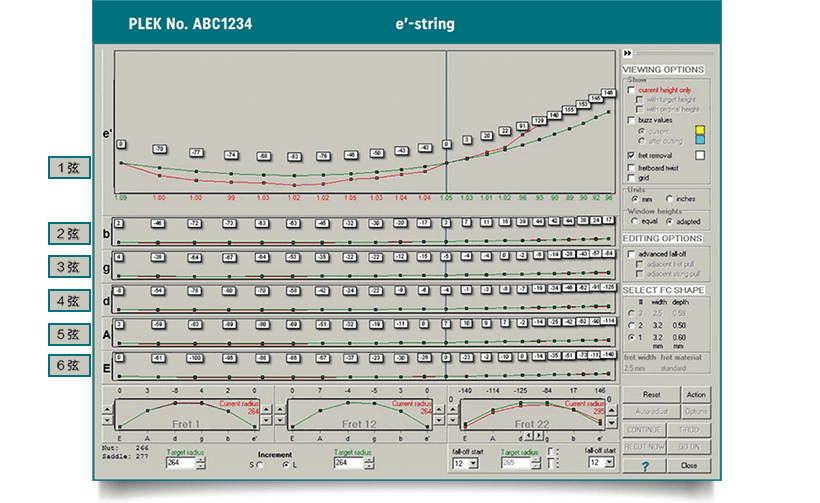
In this magnified view of the first string, the red line represents the scan results of the untreated frets, while the green line indicates the recommended curve (which allows for further adjustment), ultimately leading to an optimized result.

Many guitarists ask: if string tension changes, doesn’t the PLEK process lose its significance? In reality, the fret profile shown in the left image—regardless of how the truss rod is adjusted—carries a high risk of fret buzz. Conversely, if the instrument undergoes PLEK processing (resulting in the profile shown on the right), the fret curve remains smooth and continuous even if string tension shifts or the truss rod is tweaked to alter neck relief; consequently, fret buzz is avoided. During mass production, PLEK does not set the action to the absolute limit (though it could go lower) because playing styles vary, meaning the threshold for “fret buzz” differs from person to person. We aim for a setup that most players find buzz-free; if a lower action is desired later, it can be achieved by filing down the saddle.

Playability in the lower fret positions depends largely on the proper cutting of the nut slots. While manual adjustment is one option, the results are often inconsistent when factories attempt to manually adjust slot depth and width. PLEK automatically calculates and machines nut slots based on fret data scanned after the initial cutting process, making it possible to optimize low-fret playability at scale. High-speed milling cutters—spinning at tens of thousands of RPM—ensure that nut slot machining is both rapid and precise.

Playing feel is determined by various factors, such as action, the presence of fret buzz, string smoothness, fret-end rounding, and string tension.

PLEK primarily controls action and fret buzz; let’s examine how it achieves this.

String vibration requires space. If we connect the contact points at the nut and saddle with the outer boundary of the string’s vibration, we find a complex envelope; the fundamental frequency and harmonics create a highly intricate vibration envelope.

Suppose the string requires a minimum clearance of 2.5mm from the straight-line path to vibrate freely. If this distance is too small, the string lacks sufficient space and buzzes against the frets; if it is too large, there is excessive clearance, resulting in high action that negatively impacts playability.

Our first step is to adjust this distance to an optimal range—specifically, by using the truss rod to set the neck curvature.

PLEK
plek 调试 STS
plek

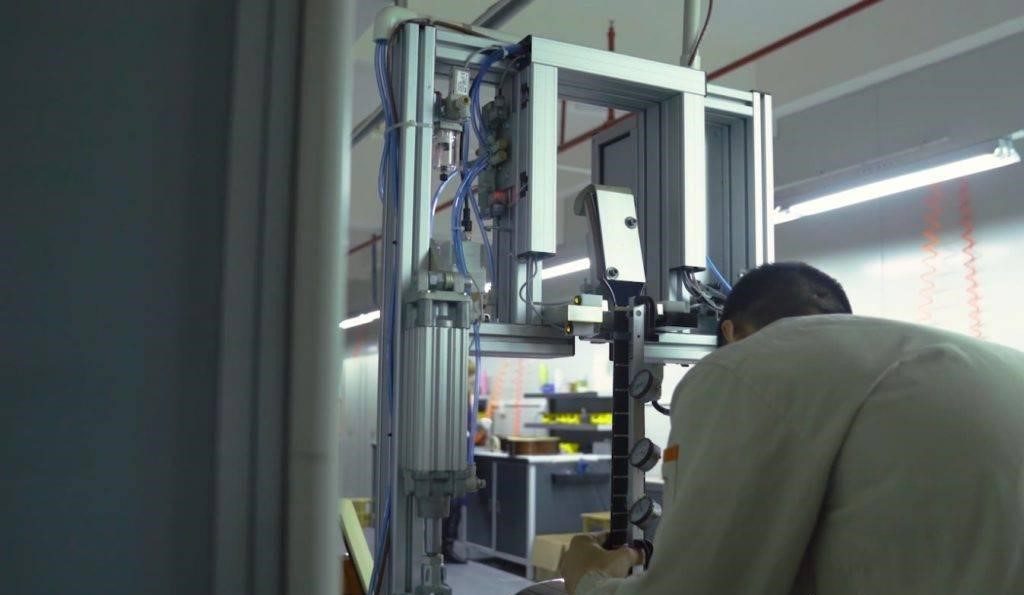
PLEK features a string tension simulator known as the STS. We secure the guitar into the STS system using a clamping fixture and employ a precision dial indicator assembly and truss rod adjustments to bring the neck curvature to an optimal state.

After adjusting the neck curvature, let us examine the image above:
First, look at the red curve on the left (representing the guitar before PLEK processing): the contact point at the nut is high, resulting in excessive string height at the lower frets; the overall fret profile is uneven, causing insufficient clearance at some frets (leading to buzzing) and excessive clearance at others (resulting in high action).
Now, look at the green curve on the right (representing the guitar after PLEK processing): the nut contact point has been lowered, reducing string height at the lower frets; the fret profile is smooth and consistent, ensuring that every fret has the ideal amount of clearance for vibration, thereby achieving low action without fret buzz.

PLEK primarily adjusts fret height and nut slot depth, making it a highly precise adjustment process.
Throughout the process, pneumatic cylinders simulate string tension. PLEK analyzes string vibration envelope data and—adhering to a principle of minimal fret material removal—calculates the optimal neck curvature. The operator then adjusts the truss rod to optimize the neck curve in preparation for the PLEK cutting process.
Next, PLEK scans the nut, frets, and saddle to calculate cutting parameters and performs precision machining with an accuracy of 0.01mm. A secondary scan follows to verify the quality and precision of the work.
The core of the PLEK system lies in its simulation of string tension throughout the process and its cutting programs based on scan data; these features are what give PLEK-processed guitars such exceptional playability.

PLEK then scans the nut, frets, and saddle to determine the cutting areas and performs high-precision machining on all three components—again, while simulating string tension.

Finally, PLEK performs a secondary scan to ensure the quality and precision of the machining.

Next, the impact of string tension on neck curvature is corrected using a fixture equipped with a dial indicator and actual string tension. Then, a custom-built CNC machine is used to precisely cut the saddle to achieve the target action (string height).

Please note:

Fret buzz is a relative concept; it depends on the player’s technique, the type of strings used, and the playing environment.
Among environmental factors, humidity has the most significant impact: excessive humidity affects playability (increasing action), while low humidity causes the wood to dry out, warp, and crack, leading to fret buzz (decreasing action).
Please adjust the truss rod within a relative humidity range of 40–60% to achieve the ideal setup (ideally, when holding down the 6th string at the 1st and 14th frets, the gap between the string and the fret wire at the midpoint should be roughly the thickness of a sheet of paper).
With the headstock facing away from you, insert the adjustment wrench through the soundhole. Turn left (counter-clockwise) to raise the action, and turn right (clockwise) to lower it.
If adjustments prove ineffective due to high humidity, loosen the strings, place the guitar in its case with a desiccant, and retune the strings once the ambient humidity returns to normal levels.

PLEK PRO:

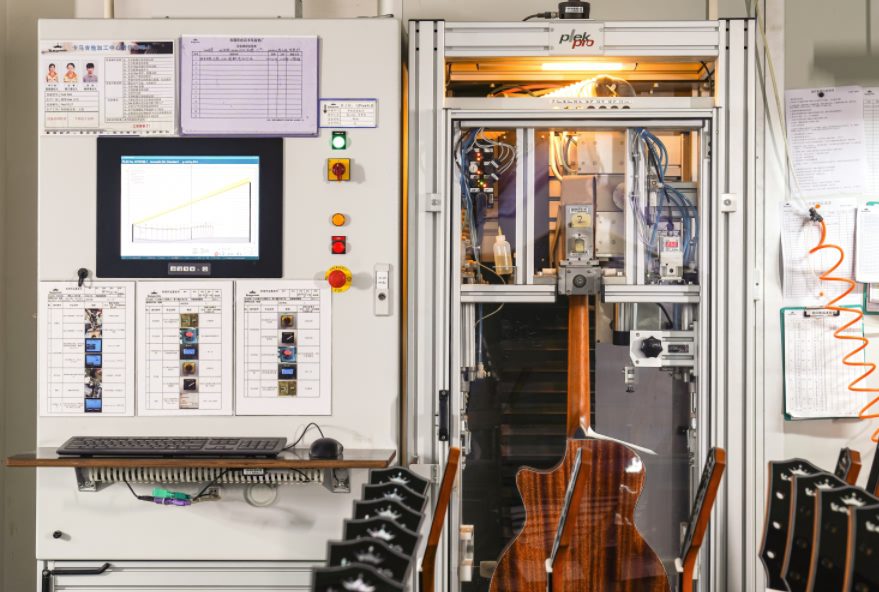
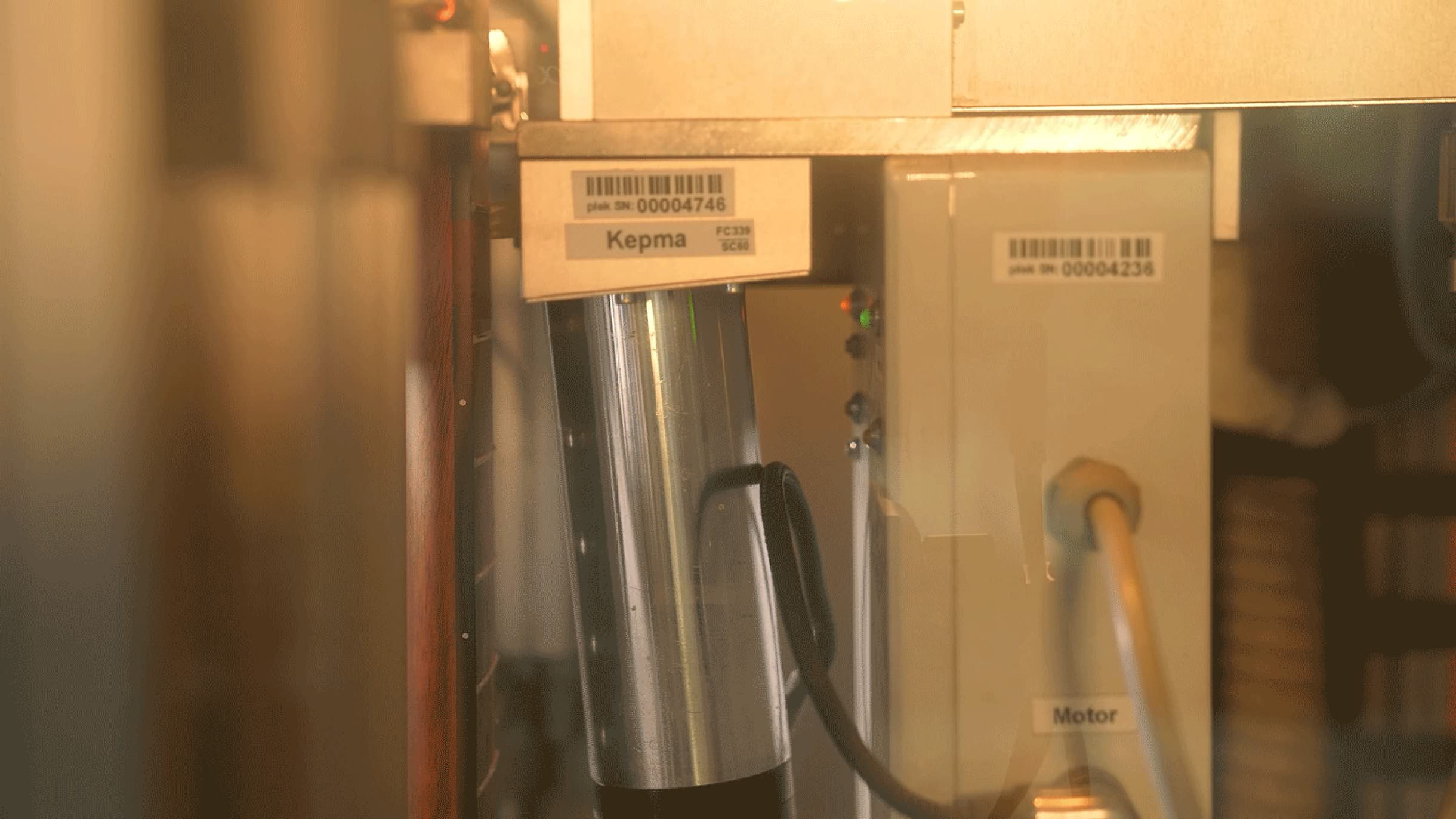
The PLEK PRO is a PLEK machine designed for guitar manufacturing; it not only performs precise fret dressing but also aids in quality control and research and development (by building a database).

Compared to standard PLEK machines, the PLEK PRO offers increased speed, efficiency, and greater operational consistency.

The PLEK PRO features a flexible module-swapping mechanism, making the clamping and setup process for different guitar models far less time-consuming and labor-intensive.

The visual data generated by the PLEK PRO scans supports R&D efforts. For instance, it allows for the quantitative analysis of the relationship between truss rod adjustments and changes in neck curvature. Because the scan results are visual, researchers can conduct in-depth studies on how humidity affects wood deformation and gluing processes; this is invaluable for analyzing wood stability and guitar assembly workflows.

With the PLEK PRO, issues such as the impact of material defects, manufacturing process problems, and reasons for customer returns can be analyzed in greater depth. Its visual feedback optimizes the overall workflow, enhances production continuity, and stores quantitative data for future comparisons—data that serves as a guide for future improvements.

plek 第一台